
Last updated November 24, 2026
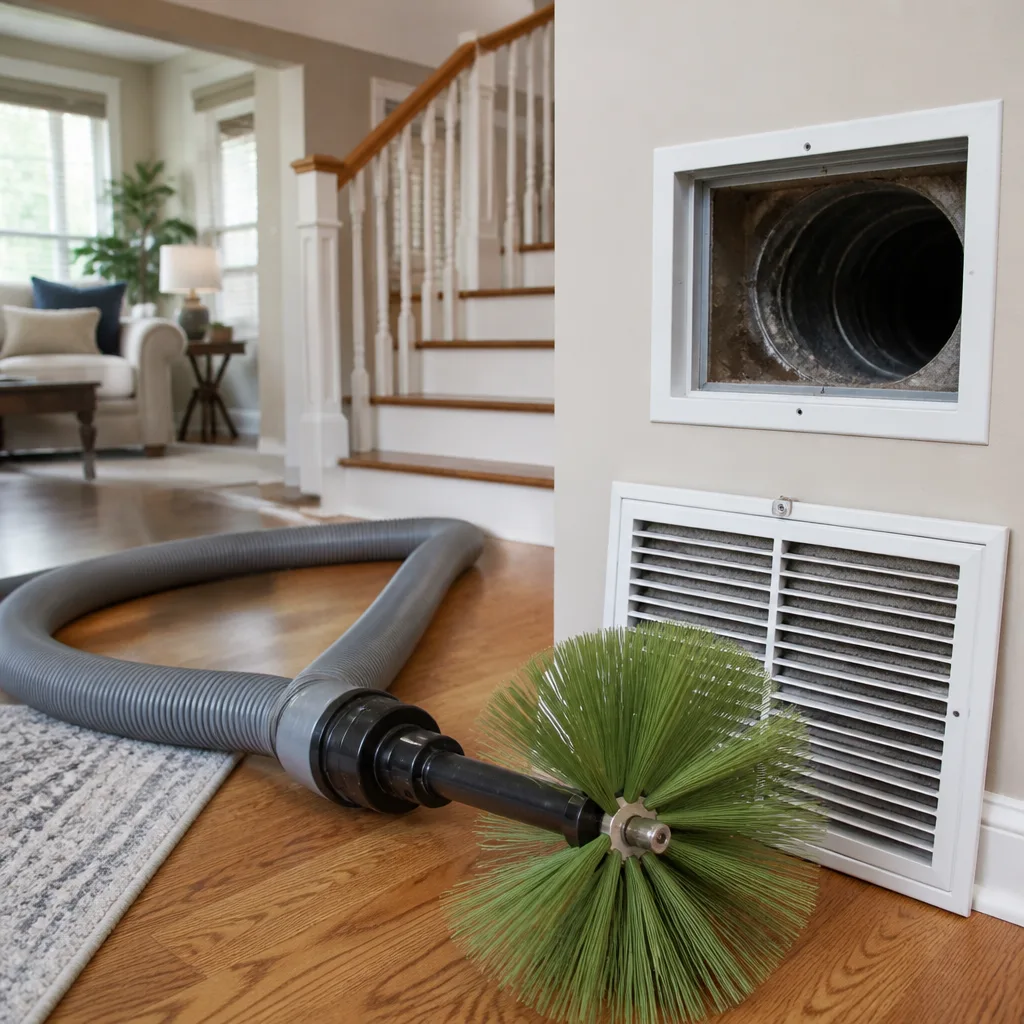 Whole-home duct cleaning
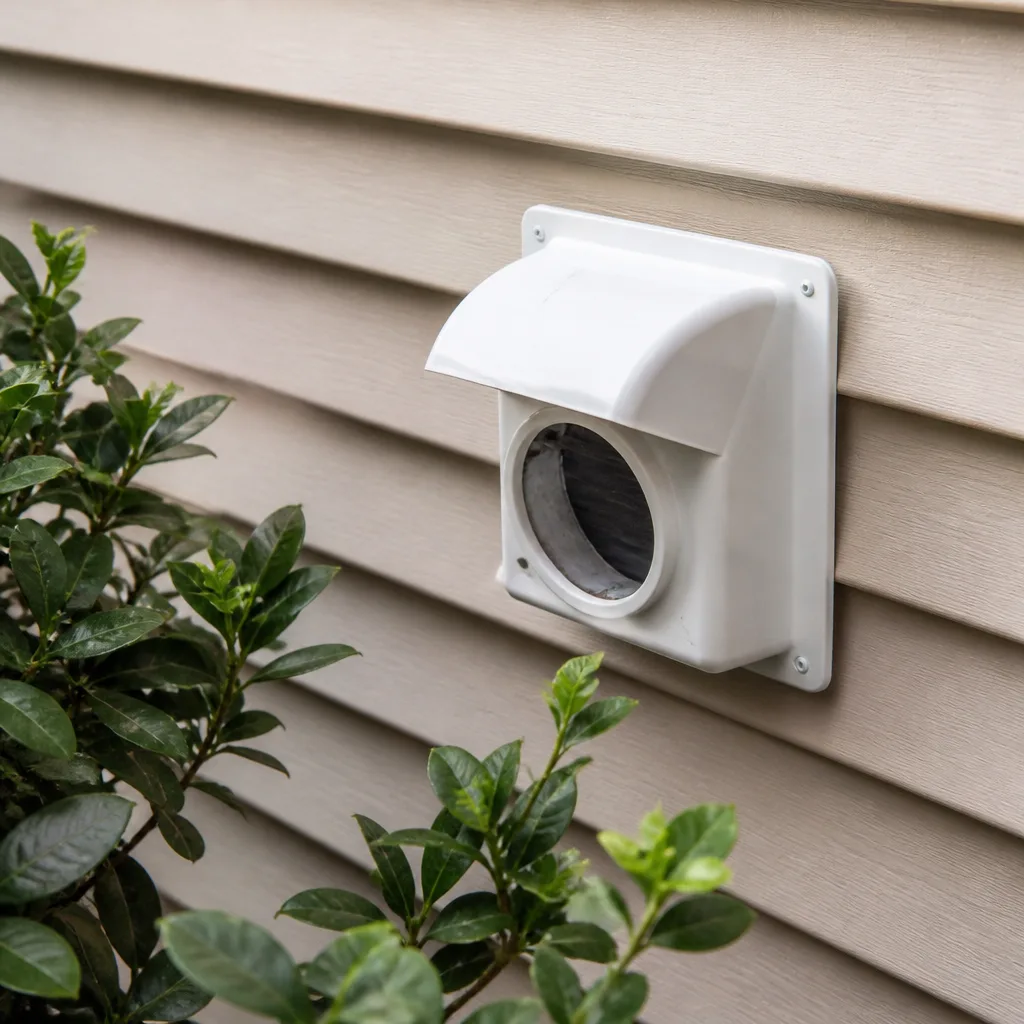 Dryer vent cleaning
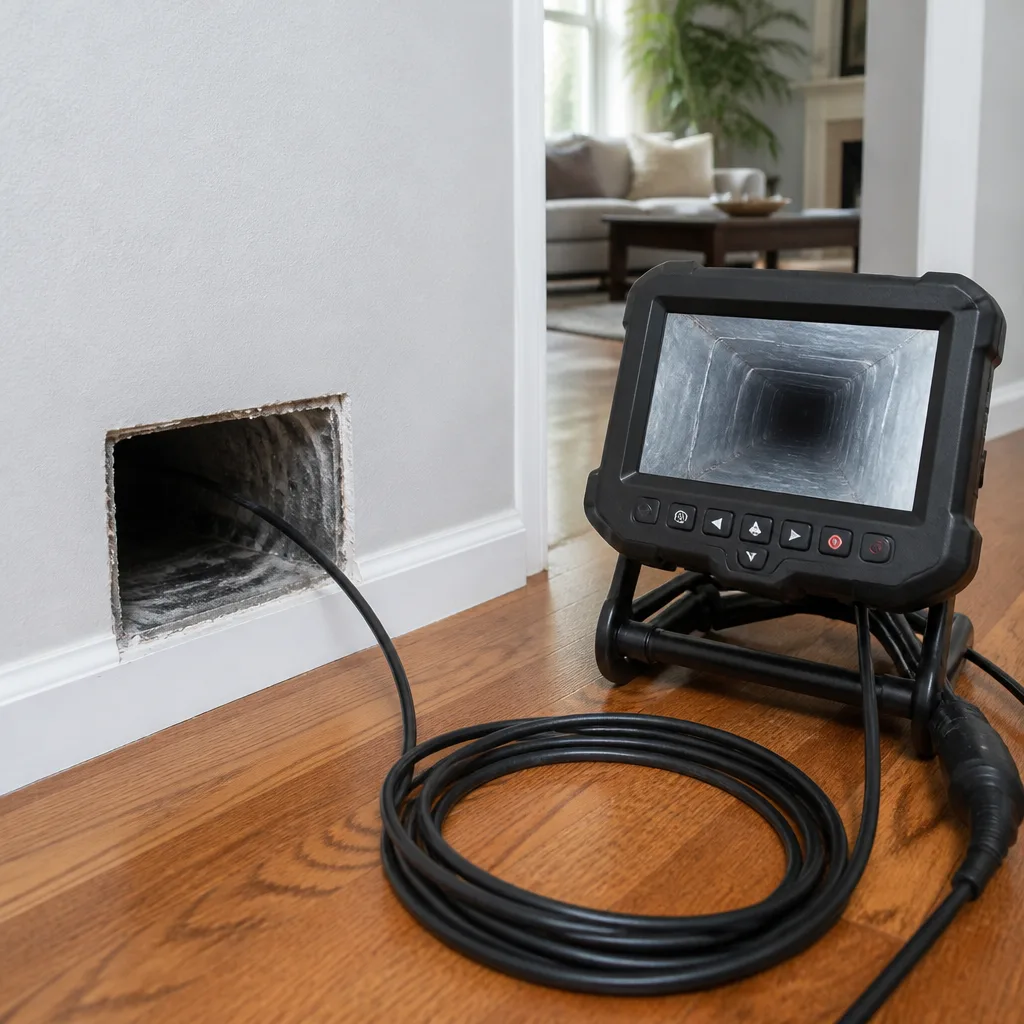 Camera inspection
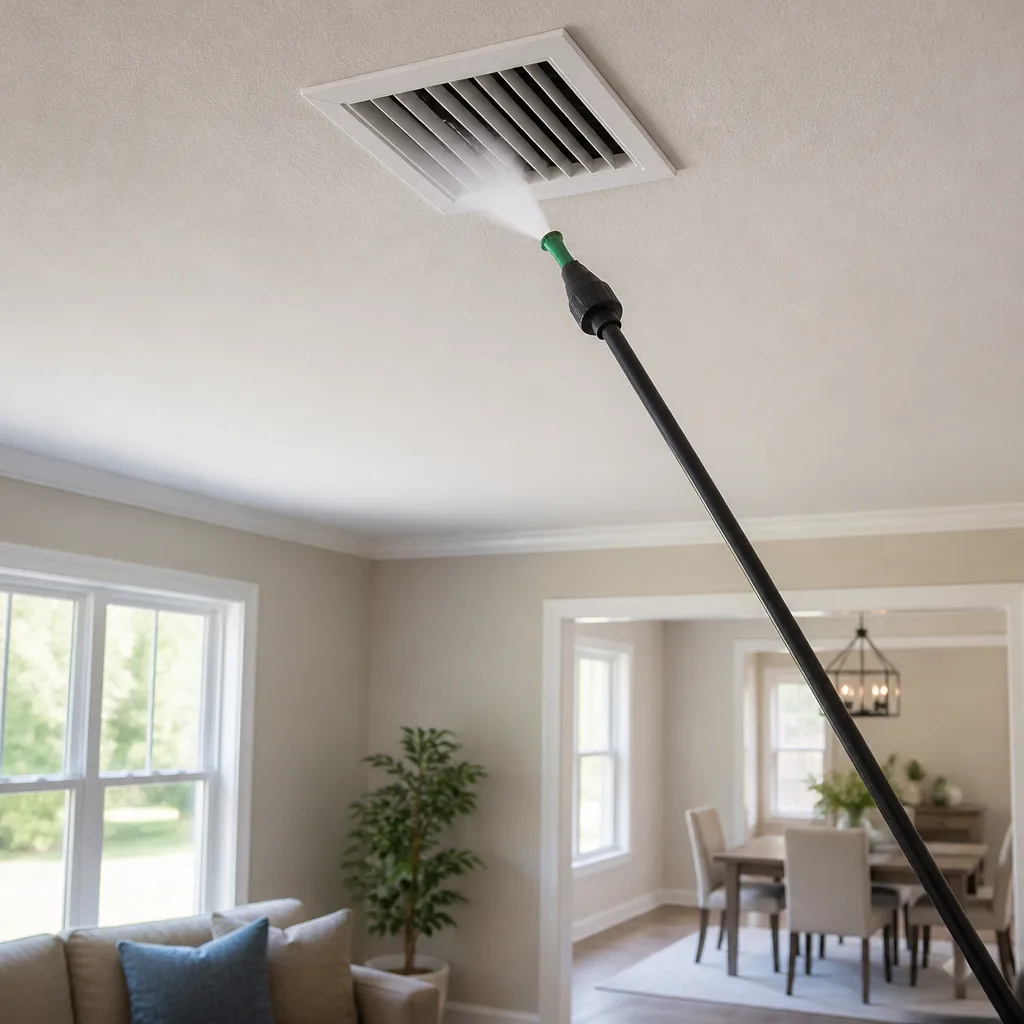 Sanitizing & deodorizing
Whole-system duct and dryer vent check with before-and-after photos - you see exactly what came out of your vents
That "$99 whole-house special" is a bait ad - the real number appears once they are in your hallway, or the "clean" is a shop-vac at the register. We photograph the inside of your ducts before and after instead.
Air Duct Cleaning Warning Signs: A Syracuse Homeowner’s Reference Guide
If one room in your home is always colder than the thermostat setting, the common advice is “check for drafts.” But in a leaky duct system, that cold room is a pressure diagnostic – it’s telling you exactly where your conditioned air is going instead of where you need it. Most duct warning signs get misdiagnosed this way every day: dust blamed on housekeeping, a musty smell blamed on the basement, uneven temperatures blamed on the furnace. In Syracuse, where homes run heating and cooling across some of the widest seasonal swings in northern Utah, those symptoms carry real diagnostic weight. In this guide we’ll show you how to read them, separate a cleaning problem from a repair problem, and know when it’s time to call.
Quick Answer
The main warning signs of a duct problem are streak marks at registers, filters that load up fast, visible dust at return grilles, rooms that never match the thermostat, musty or ammonia-like odors that appear when the HVAC starts, and allergy symptoms that worsen within an hour of the system coming on. In Syracuse, a dusty home or a cold bedroom is more often a duct sealing or leakage issue than a housekeeping one, so the symptoms need to be read as system diagnostics rather than as house problems.
Styles & brands we work with
- Whole-home duct cleaning
- Dryer vent cleaning
- Camera inspection
- Sanitizing & deodorizing
Table of Contents
- Why Duct Symptoms Get Misread
- The Three Dust Patterns That Point to Your Ducts
- Using Airflow Asymmetry to Find Leaks
- Odor Diagnostics: Mold, Pests, and Construction Debris
- Symptom Timing: The Hour After HVAC Startup
- What to Inspect Before You Call
- Cleaning Problem vs. Repair Problem
- Common Mistakes to Avoid
Why Duct Symptoms Get Misread
A duct system is invisible. Because you can’t see it, you blame what you can. A dusty shelf gets blamed on a poor furnace filter. A cold bedroom gets blamed on a drafty window. A sour smell gets blamed on the crawlspace. Each of these belongs to a different problem area, and none of them points at the ducts – so the ducts never get checked, and the symptom keeps coming back.
We’ve seen this play out across Syracuse again and again. Utah’s high-desert climate runs dry, with big temperature swings between afternoon and overnight. That combination puts duct systems through stress: dry air moves more static charge, temperature cycling expands and contracts the joints, and any small leak at a boot or a joint stays tiny until it doesn’t. In a Syracuse home with forced-air heating and cooling running hard in July and again in January, a small duct leak runs year-round and quietly compounds.
The other reason symptoms get misread is timing. Duct contamination doesn’t announce itself with a single obvious event. It builds. A renovation leaves drywall dust in the return plenum. A filter gets skipped one season. A pinhole leak pulls attic air into the return. By the time the homeowner notices, the symptom is far removed from the cause – and the instinct is to fix what’s visible instead of diagnosing what’s circulating.
This guide is about flipping that instinct. Every symptom we describe below is a diagnostic clue, and some of them point to cleaning, some to repair, and some to a professional assessment that sorts out which is which. That’s the frame to hold.
The Three Dust Patterns That Point to Your Ducts
Normal household dust settles everywhere evenly and slowly. Duct-related dust does not. It concentrates, recurs, and appears in specific places. There are three patterns that tell them apart.
Streak marks at registers
Look at the wall or ceiling right around a supply register. If you see a dark halo – a shadow pattern radiating outward from the vent trim – that’s called “ghosting,” and it means air is being forced through a gap around the register boot or the connected ductwork. The escaping air carries dust particles and deposits them on the drywall. A clean, tight boot doesn’t ghost. A leaky one does, and often within a few weeks of cleaning.
Rapid filter loading
Change your filter and note the date. If it darkens and clogs noticeably faster than your manufacturer’s recommended interval – dull gray film or visible dust matting across the media – the filter is catching what the ducts and the return are pushing into it. Filters protect equipment. They aren’t supposed to be a dust-catchment system for a dirty return plenum. A filter that loads in weeks, not months, usually points to the return side.
Dust reappearing within days of cleaning
Wipe a shelf clean and mark the date in your head. If a fresh layer of dust is visible within a few days, that’s not housekeeping. That’s dust being actively redistributed by the system – through a dirty return, loose flex duct, or a boot with an open gap. In our experience, this single pattern is the most reliable way for a Syracuse homeowner to distinguish an air-quality problem from normal house dust.
If you catch two or more of these patterns, that’s a strong signal that the system itself deserves a look. You can read more about the full service in our air duct cleaning guide for Syracuse homes.
Using Airflow Asymmetry to Find Leaks
Rooms that never match the thermostat are a pressure map of your duct system. If the master bedroom runs 4 degrees too cold in summer while the living room runs 2 degrees too warm, that’s not the furnace heating differently – the furnace is heating the same air. The imbalance is in the delivery. The system is losing supply air somewhere between the air handler and the register, and nature is doing the diagnostic for you.
Here’s how to use it, without opening any walls.
- Write down the temperature in each room at the same time of day, with the doors open, for three days. Note the room that misses the thermostat setting most.
- Close a sheet of tissue paper onto each supply register in turn and watch how strongly it flutters. Registers that barely move the tissue are on a weak branch – a likely leak or blockage point.
- Stand near each ceiling or floor register for thirty seconds with the system running. A faint whistling hiss points to a restricted boot or gap; a strong drift of air at a wall or baseboard (not the register) points to a disconnected joint behind it.
- Trace the duct run in your basement or crawlspace from the air handler outward, looking for flex duct that sags, kinks, or has pulled free from its collar.
That last step is where most Syracuse leaks hide, because so much of the housing here backs onto crawlspaces, unfinished basements, or attic chases where a flex duct can run loose without anyone noticing. A duct that’s come off an attic boot dumps conditioned air into the attic in January and pulls hot attic air in during a July afternoon. Neither shows up on a furnace inspection.
When the asymmetry is consistent, and no single room is the only problem, the fix usually isn’t more cleaning – it’s HVAC cleaning paired with duct sealing. Both are jobs for a technician who can see the whole pathway.
Odor Diagnostics: Mold, Pests, and Construction Debris
Smell is the most misread warning sign of all, because three very different problems produce three very different smells, and they call for three different responses. The mistake is treating them as one problem.
Mold smell – organic, damp, earthy
Mold in ducts smells damp and musty – like wet cardboard, a damp basement, or old wood. It usually appears when the HVAC first comes on in the morning or after a humid stretch, then fades. In Syracuse, the humid stretch runs later in the summer and early fall, so musty smells that appear mid-summer usually point to condensation in the cooling coil pan or wet insulation inside the duct plenum. Cleaning removes the food source, but the moisture source needs addressing too – a damp duct cleans up and then comes back if the coil pan stays wet.
Pest smell – sharp, ammonia-like, or distinctly animal
Pest contamination has a sharper smell than mold, often described as ammonia, urine, or a distinctly animal scent that doesn’t fade with airing the house out. Rodents and insects use ducts as sheltered runs, and the danger is twofold: contamination and physical damage to the duct lining. Pest contamination needs the affected section identified and cleaned, and it often needs duct repair too, because a rodent chewed through flex duct to get in. Cleaning alone doesn’t resolve the entry point.
Construction debris off-gassing – chemical, adhesive, or fresh-paint
After a renovation, ducts commonly pick up drywall dust, sawdust, insulation fibers, and construction adhesive odors. The smell is more chemical than biological – like a new build, or a fresh-paint sharpness. Off-gassing fades over weeks but the physical debris stays. That’s why post-renovation cleaning is a different job from a routine clean: the goal is removing construction spoil before it settles into the seams and grilles. In Syracuse homes where winter work happens indoors, this is a common scenario.
Matching the smell to its category is the first step. Guessing wrong wastes a service call, because a duct sanitizing treatment does nothing for a rodent problem and a duct repair does nothing for a moisture source.
Symptom Timing: The Hour After HVAC Startup
Allergy and respiratory symptoms can have dozens of causes, so timing is the diagnostic. Duct-related symptoms have a pattern: they get worse within an hour of the HVAC starting, and they get better when you leave the house for the day. If you wake up congested and clear up after an hour at work, then come home and feel it return when the system cycles on, that’s a duct signal.
That pattern points at duct contamination specifically because the system is the trigger. A dusty house can cause sneezing. A duct that blows contaminated air into a room when the blower starts leaves the room smelling dusty or musty for a stretch, then clears as the air settles. A room that improves when you open a window for five minutes and worsens again the next time the HVAC cycles is telling you where the air is coming from.
- Worse indoors, better outdoors: points to the building’s air pathway, not a seasonal allergen.
- Worse within 60 minutes of startup: points to air being pushed out of a duct, return, or plenum.
- Worse in one or two rooms but not others: points to a specific branch or boot.
- Worse after a renovation or a home purchase: points to accumulated spoil and a system that hasn’t been cleaned since.
- Worse when you turn on the heat after months of not running it: points to accumulated dust and biological growth that settled during the off-season.
If any of these patterns is consistent over two or more weeks, an assessment is the right call. A qualified technician can verify visually and by sampling the return and supply sides, which is more reliable than a homeowner’s best guess. Syracuse Air Duct Cleaning Pros uses Rotobrush contact-vacuum brushes and Nikro negative-air equipment during assessment and cleaning so that dislodged material is captured rather than spread through the house.
What to Inspect Before You Call
You can gather useful information before scheduling anything, and it will make the assessment faster and more accurate. Here is what to look at, in order.
- Supply registers. Shine a light across each one. Look for ghosting streaks, dust around the trim, visible dust on the inside of the grille, and any loose screws or gap at the boot.
- Return grilles. Remove the grille on the largest return. Look for heavy dust matting on the grille, visible dust coating the first few inches of the box, and any debris (drywall chunks, insulation) sitting inside.
- Air handler door. With the system OFF, and only if you can safely open it without tools or disassembly, look at the filter and the inside of the blower compartment. A dirty filter with a clean compartment is normal wear. A dirty compartment points to a return-side problem.
- Visible duct runs. In the basement, crawlspace, or attic, look for disconnected flex duct, sagging flex, kinked runs, and any runs that pass through unconditioned space without support.
- Filter dates. Note how quickly the filter loads, and compare against the labeled interval.
- Thermostat log. Record each room’s temperature once a day for three days at the same time.
Note that this is a visual check, not a diagnostic tool. Do not disassemble ductwork, do not open electrical panels, and do not reach into the air handler. A trained technician has the equipment to inspect the interior of the system, and a professional assessment is what actually confirms the diagnosis.
Our technicians have up to 12 years of experience reading duct systems in Syracuse and the surrounding area. That experience matters most in cases where a homeowner’s notes on ghosting and temperature asymmetry narrow down the problem quickly.
Cleaning Problem vs. Repair Problem
The most useful question you can ask before scheduling a visit is: is this a cleaning issue or a repair issue? A cleaning job removes what’s inside a functional system. A repair job fixes a system that’s leaking or disconnected. Treating one as the other wastes money and the symptom comes back.
Signs your issue is primarily cleaning:
- Dust in the home without a cold-room or hot-room pattern
- A musty smell that fades within an hour of system startup
- Visible dust matting on grilles and inside the return box
- Recent renovation or home purchase with no known duct cleaning
- Allergy symptoms that track HVAC startup
Signs your issue also requires repair or sealing:
- Persistent hot or cold rooms that don’t change with balancing
- Whistling or hissing at registers with the system running
- Ghosting that returns within weeks of cleaning
- Visible disconnected or crushed flex duct in the basement or attic
- Pest smell (the entry point has to be fixed, not just cleaned)
In practice, many Syracuse homes need both. A system that has been slowly leaking into a crawlspace for years has both dirt and damage. That’s why our service includes dryer vent cleaning as a standalone item right alongside duct repair and sealing, so the whole air pathway can be handled in one visit. Working with Honeywell and Aprilaire components after cleaning lets us address the long-term air-quality side too, but only after the cleaning and repair are done.
Common Mistakes to Avoid
- Assuming a high-MERV filter will fix everything. A tighter filter catches more, but it doesn’t fix a leaking boot or a dirty return. It can also restrict airflow on an undersized system, which makes the room-temperature problem worse. Let a technician recommend the right filter for your system.
- Cleaning the ducts without addressing a leak. A clean duct on a leaky boot will ghost again in a few weeks. The dust reappearing is not a sign the cleaning failed; it’s a sign the underlying repair was skipped.
- Treating a musty smell with an air freshener or a standalone air purifier. The odor returns because the source hasn’t changed. In Syracuse’s dry climate, a small moisture source in a condensate pan can keep a duct damp enough to support growth without ever triggering a visible leak.
- Skipping the return side during cleaning. Returns carry as much dust as supplies. A job that only cleans the supply registers leaves the main source of airborne dust untouched, and the customer sees no improvement.
- Ignoring the dryer vent while you have the system looked at. Dryer vents are a leading cause of residential fires. Cleaning the vent is a separate job and most duct cleaners either ignore it or outsource it. Ask for it as a standalone item.
- Hiring on price alone without knowing the equipment. A shop vacuum is not a duct-cleaning machine. A truck with a negative-air machine and a contact-vacuum brush is the minimum for a real cleaning, and if the contractor can’t explain their equipment, that tells you something.
- Waiting until symptoms are severe. Duct contamination builds over years. Waiting until a smell is unbearable or a room is unusable is when the fix is largest. Catching the pattern early keeps the work smaller.
See the difference
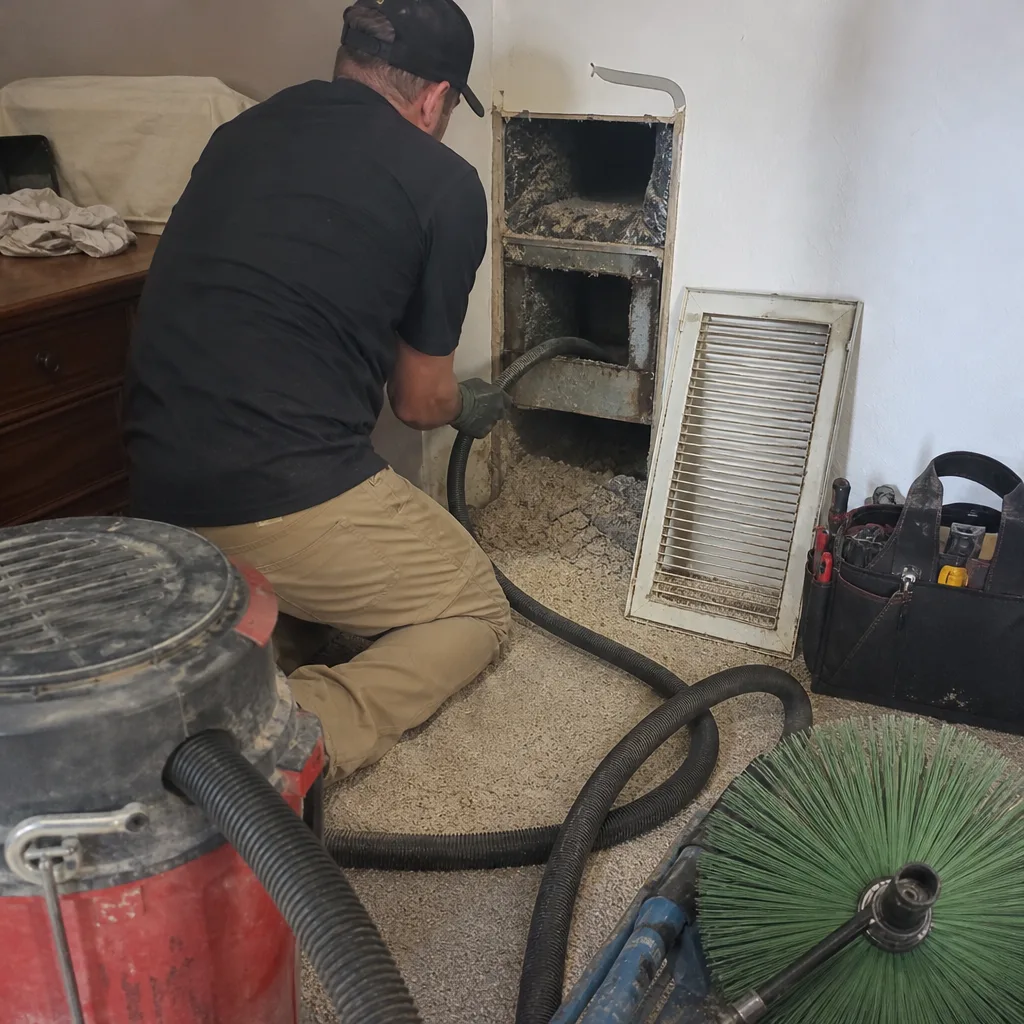 Before
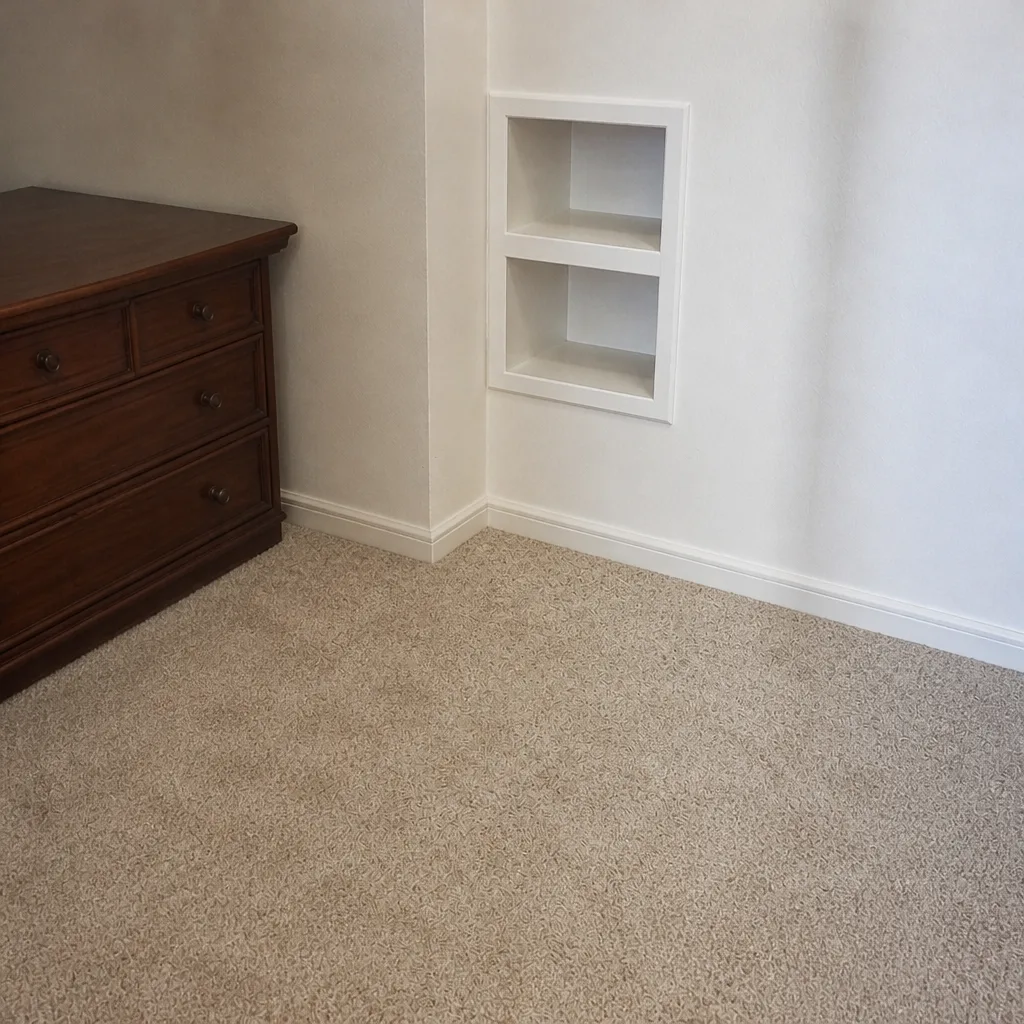 After
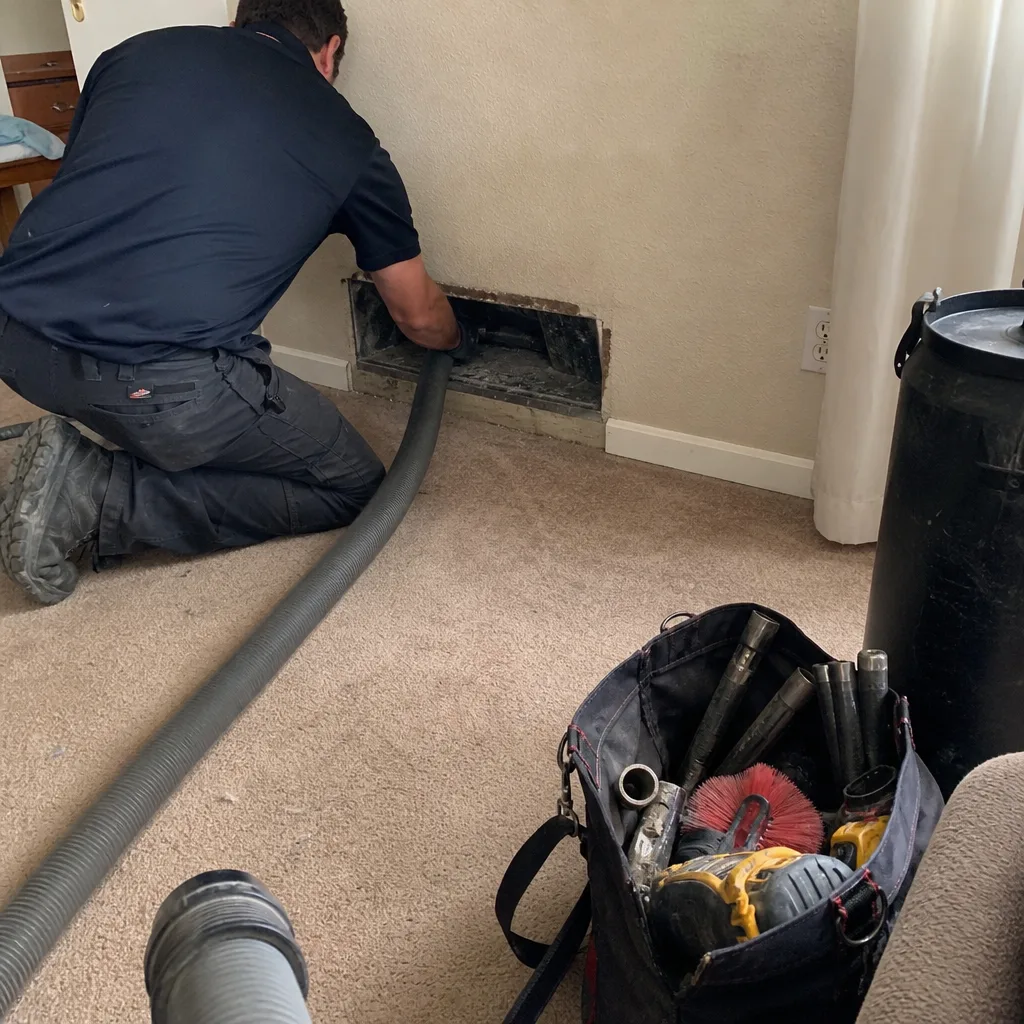 Before
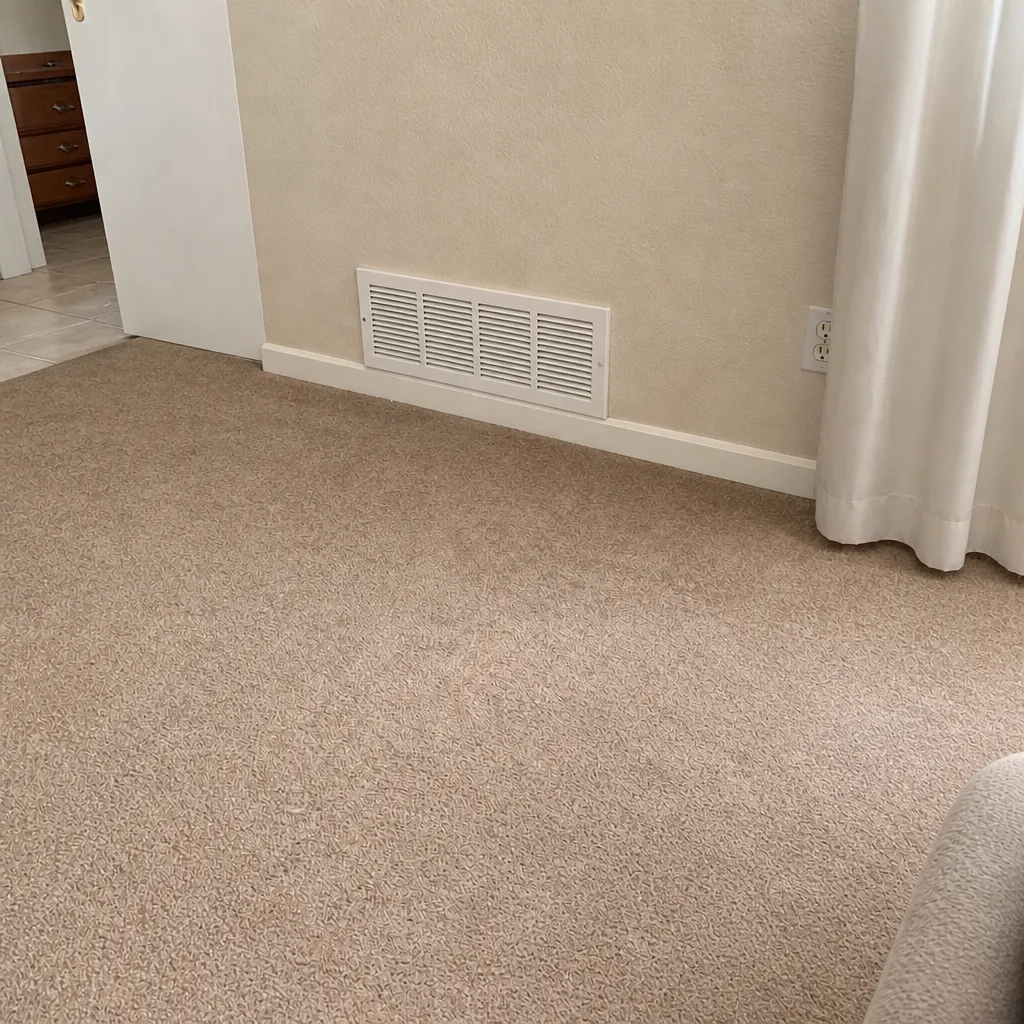 After
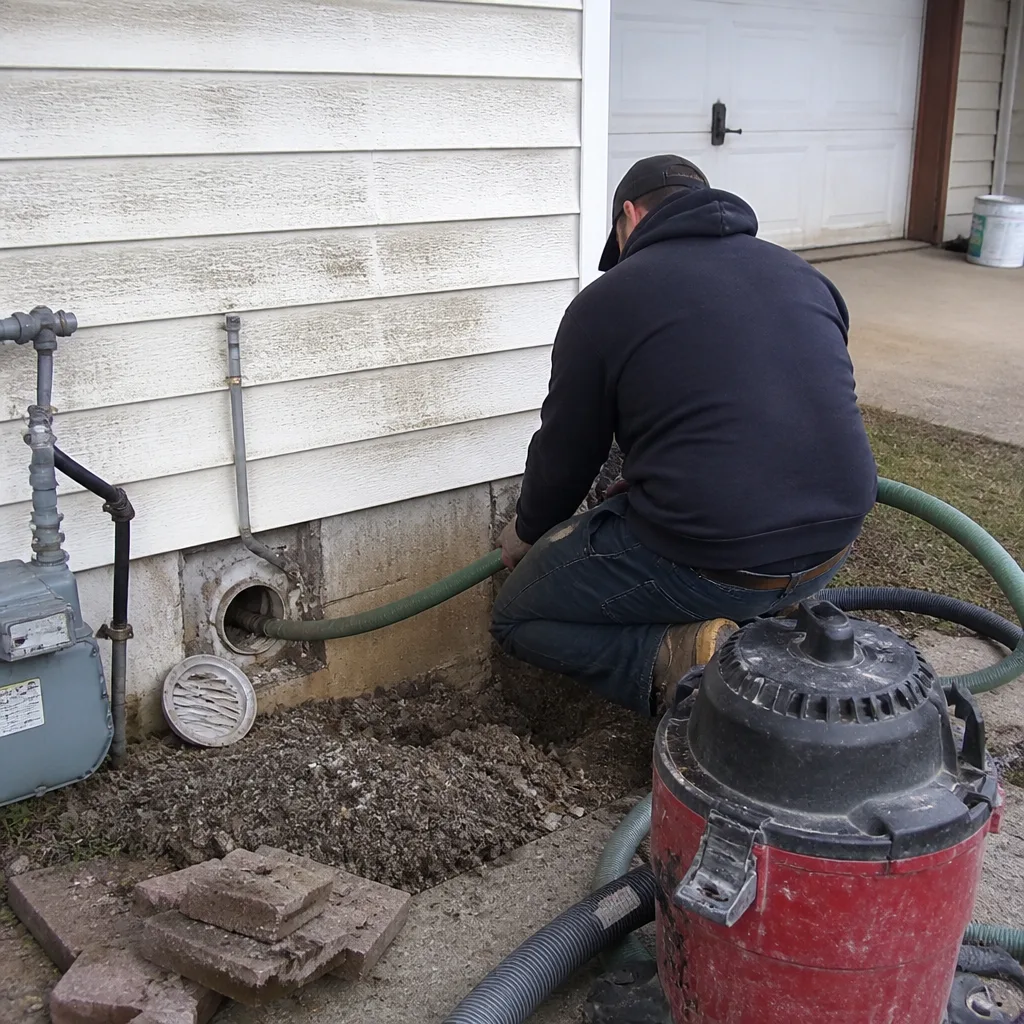 Before
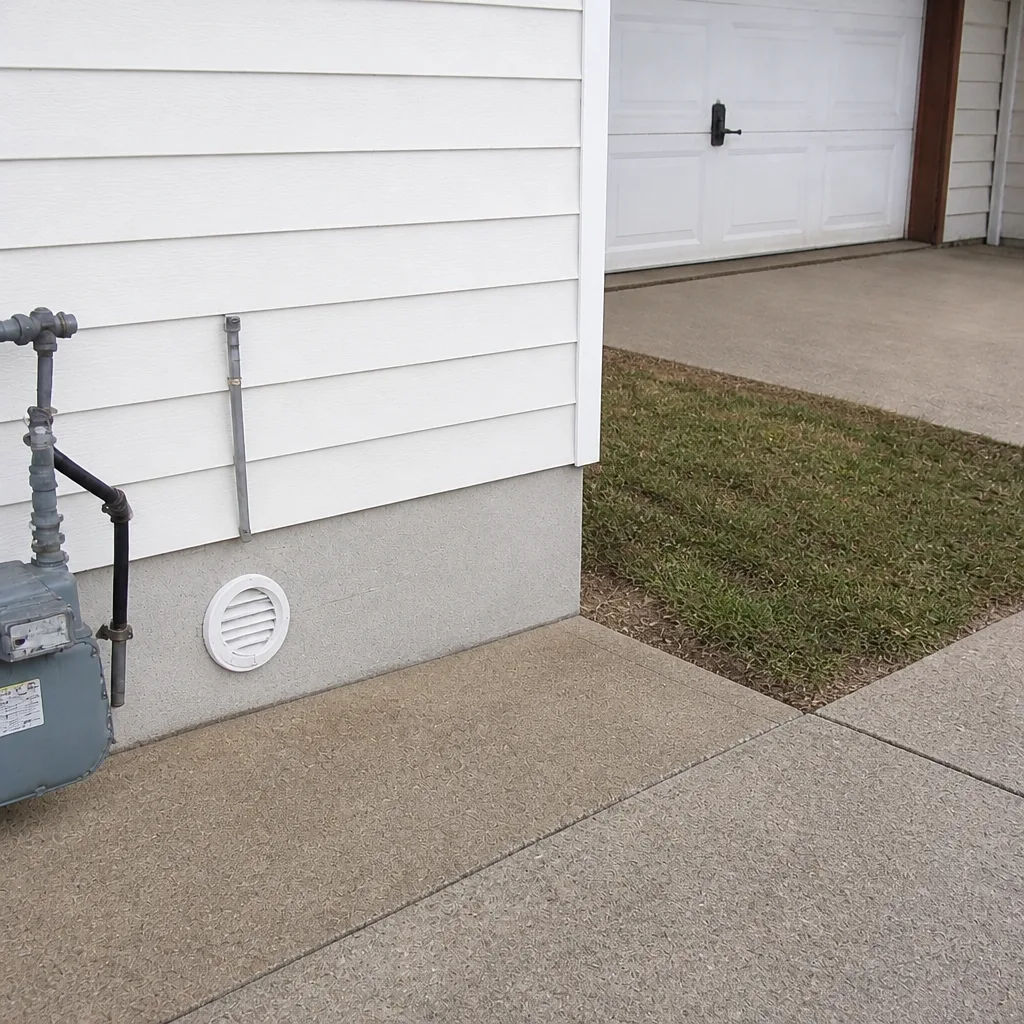 After
When to Call a Professional
Call a professional if you’ve noticed two or more of the diagnostic patterns in this guide: ghosting at registers, a filter that loads up fast, a persistent cold or hot room, a musty or sharp smell tied to HVAC startup, or allergy symptoms that improve when you leave the house. Also call if you’ve recently purchased a Syracuse home, completed a renovation, or have never had the ducts assessed. A one-time visual check by a trained technician costs less than replacing the system, and the assessment tells you which of the two is needed. Syracuse Air Duct Cleaning Pros offers free estimates in Syracuse – call (833) 549-7193 to schedule an assessment. We answer 24/7. Fast dispatch from 7am to 7pm, Sunday through Friday. One flat price per system, agreed before work starts, with before-and-after photos of your own ducts.
Frequently Asked Questions
Normal household dust settles slowly and evenly, while duct-related dust concentrates in patterns: ghosting at registers, filters that load up faster than the labeled interval, and dust that reappears within days of wiping a surface clean. If you can identify two or more of those patterns, the ducts are the likely source. If dust is even and slow, you may just need better filtration. Call (833) 549-7193 for a free estimate and we’ll help you sort out which one you’re dealing with.
A room that consistently misses the thermostat while other rooms are comfortable is usually a duct leakage or blockage signal, not a furnace problem. The air handler is delivering air, but a boot has opened or a flex run has pulled loose, and the conditioned air is going into a wall cavity or crawlspace instead of the room. Closing the register and noticing whether the airflow elsewhere changes is a quick check, but the actual fix is a duct repair. Call (833) 549-7193 to schedule an assessment.
Duct mold smells damp, earthy, and organic – like wet cardboard or a damp basement – and it usually appears when the HVAC first comes on, then fades. The smell itself is a signal, and the important step is identifying the moisture source behind it. A duct that cleans up but stays damp will grow again. Call (833) 549-7193 for a free estimate and we’ll identify the source before any cleaning begins.
No. A shop vacuum does not produce the negative-air pressure or the contact-vacuum brush action that professional duct cleaning requires, and running one into a duct will scatter dust through the house rather than remove it. Our technicians use Rotobrush contact-vacuum brushes and Nikro negative-air equipment, with Abatement Technologies air scrubbers running on-site to contain what’s dislodged. Call (833) 549-7193 for a free estimate.
There’s no universal schedule – it depends on the home. A house with pets, recent renovation, or a dusty return benefits from a check every few years, while a well-maintained home with a clean filter can often go longer. The diagnostic patterns in this guide matter more than a fixed calendar. If you’re seeing ghosting, symptom timing, or rapid filter loading, that’s the trigger. Call (833) 549-7193 for a free estimate.
Dryer vent cleaning is a separate service and a separate fire-safety issue, and most duct cleaning companies either ignore it or outsource it. We handle it as a standalone item, so you can have the duct system and the dryer vent addressed by the same team. If your dryer takes longer than it used to, that’s the warning sign. Call (833) 549-7193 to book it.
The Bottom Line
Most duct warning signs get misread because they look like something else. Dust gets blamed on housekeeping, cold rooms on drafts, smells on the basement. Read them as system diagnostics instead, and the picture clarifies: ghosting and fast filter loading point to a cleaning issue, cold rooms and whistling registers point to a repair issue, and the smell category tells you what kind of response the system needs. If two or more of these patterns are present in your Syracuse home, an assessment is the right next step – not a guess. Use the inspection checklist above, then call someone who can see inside the system with the right equipment.
If you’ve finished this guide and still aren’t sure which problem you have, that’s a normal place to be. Call Syracuse Air Duct Cleaning Pros at (833) 549-7193 for a free estimate. We answer 24/7. Fast dispatch from 7am to 7pm, Sunday through Friday. One flat price per system agreed before work starts. Before-and-after photos of your own ducts so you know the work was done.
Written by the team at Syracuse Air Duct Cleaning Pros.