
Last updated November 24, 2026
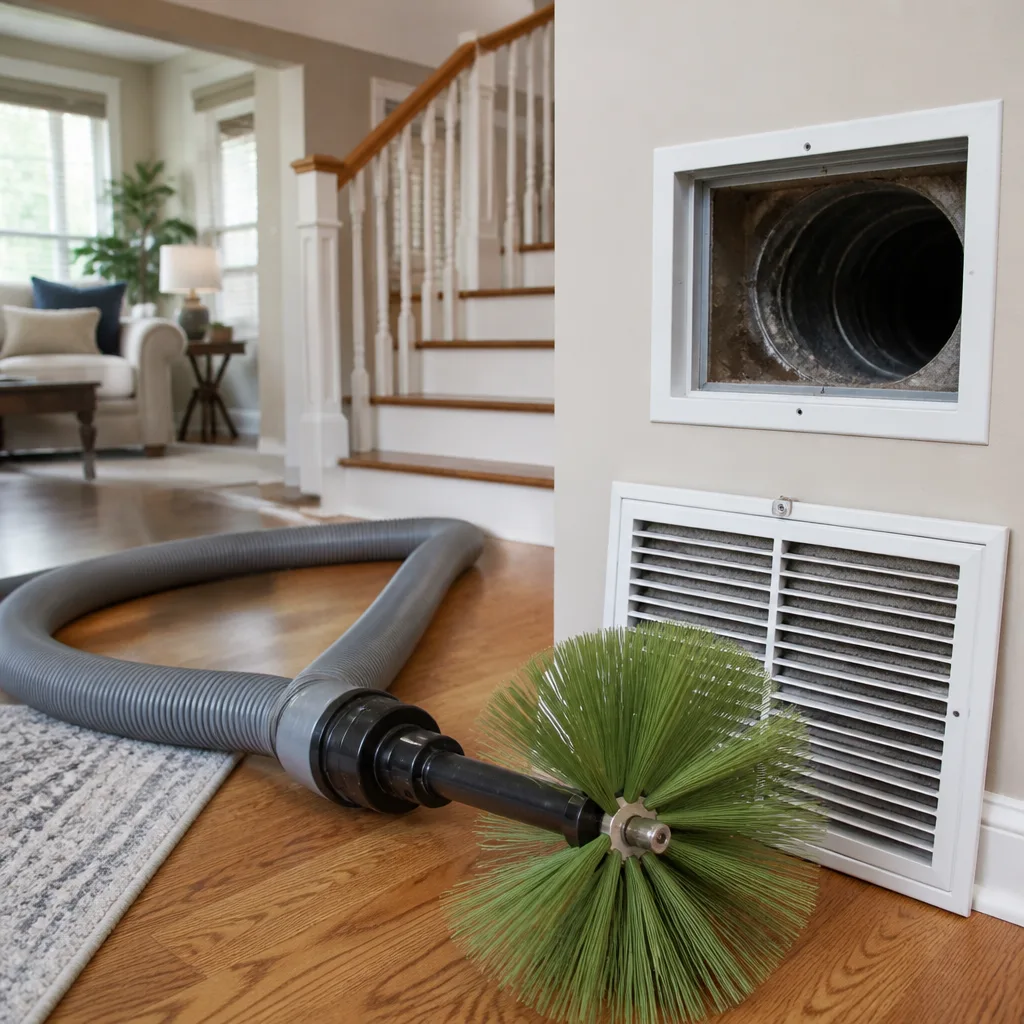 Whole-home duct cleaning
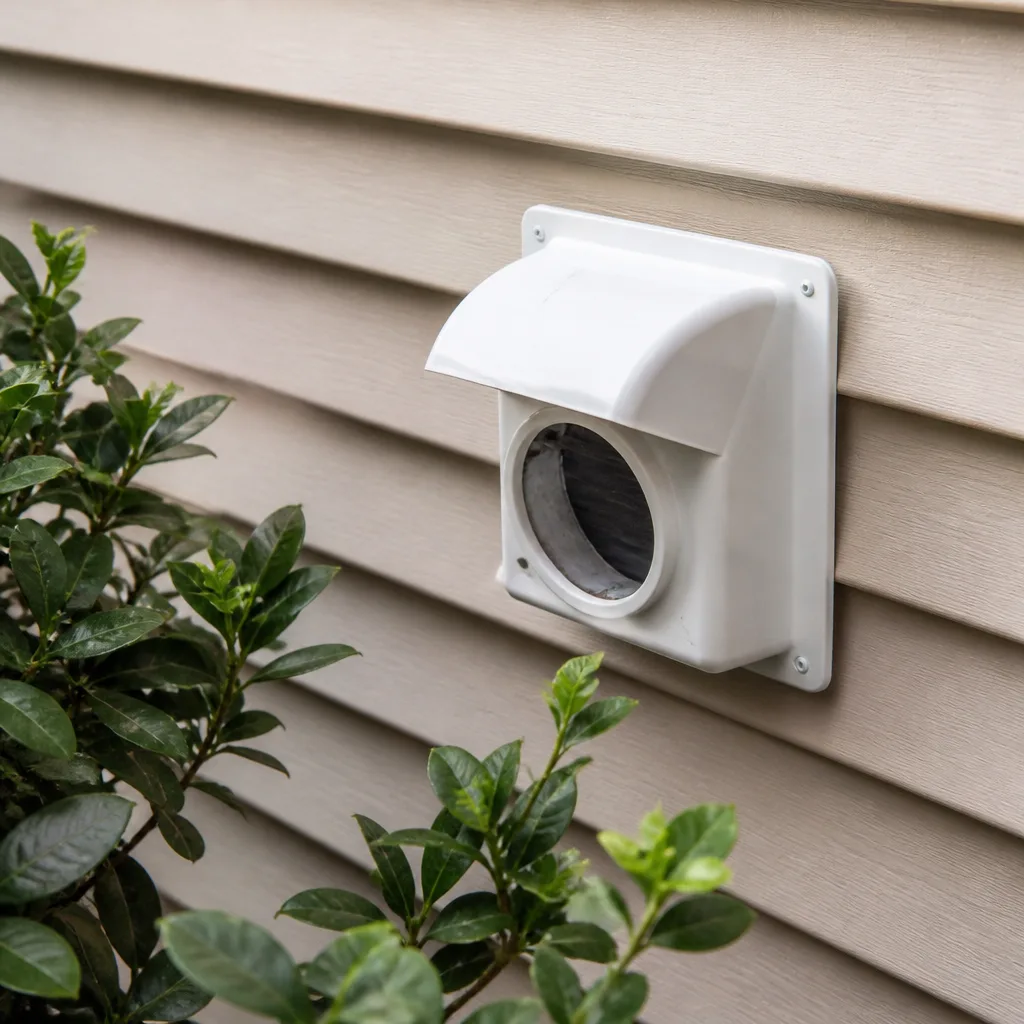 Dryer vent cleaning
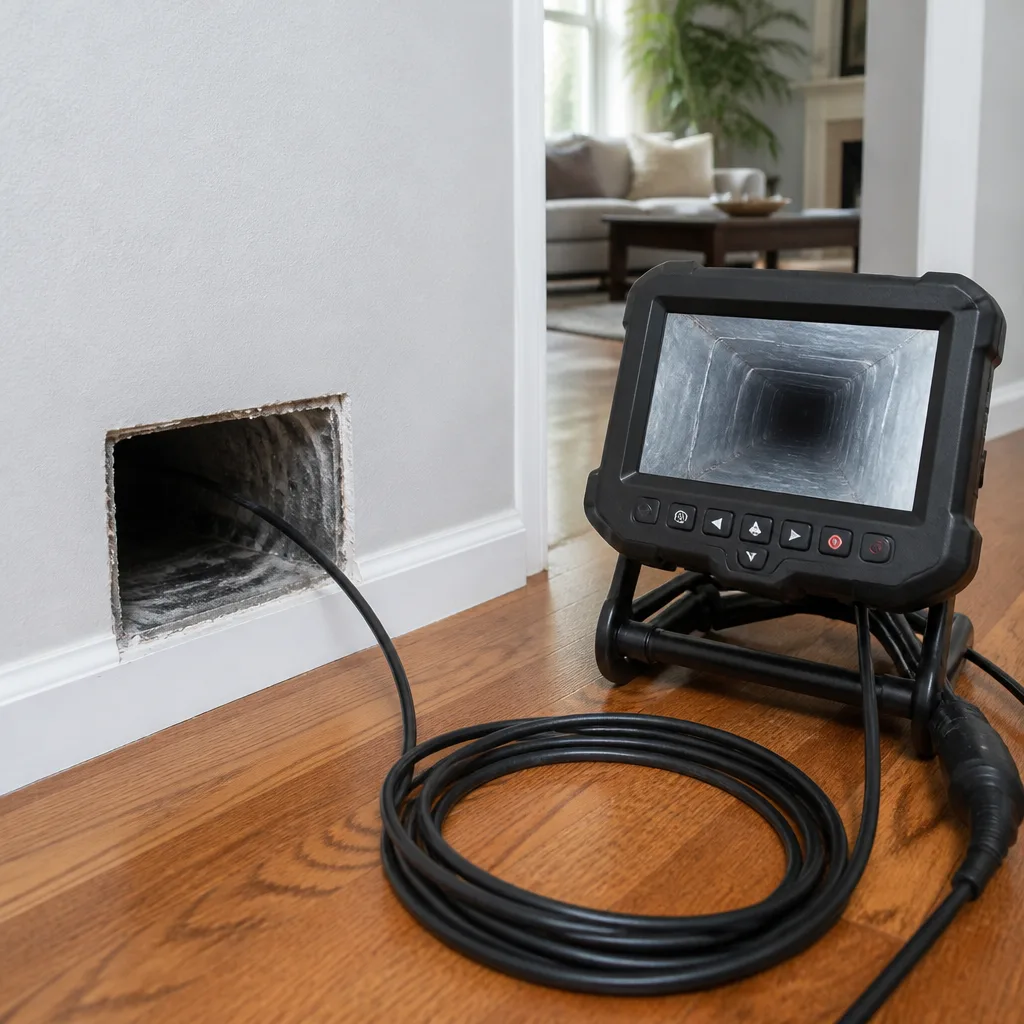 Camera inspection
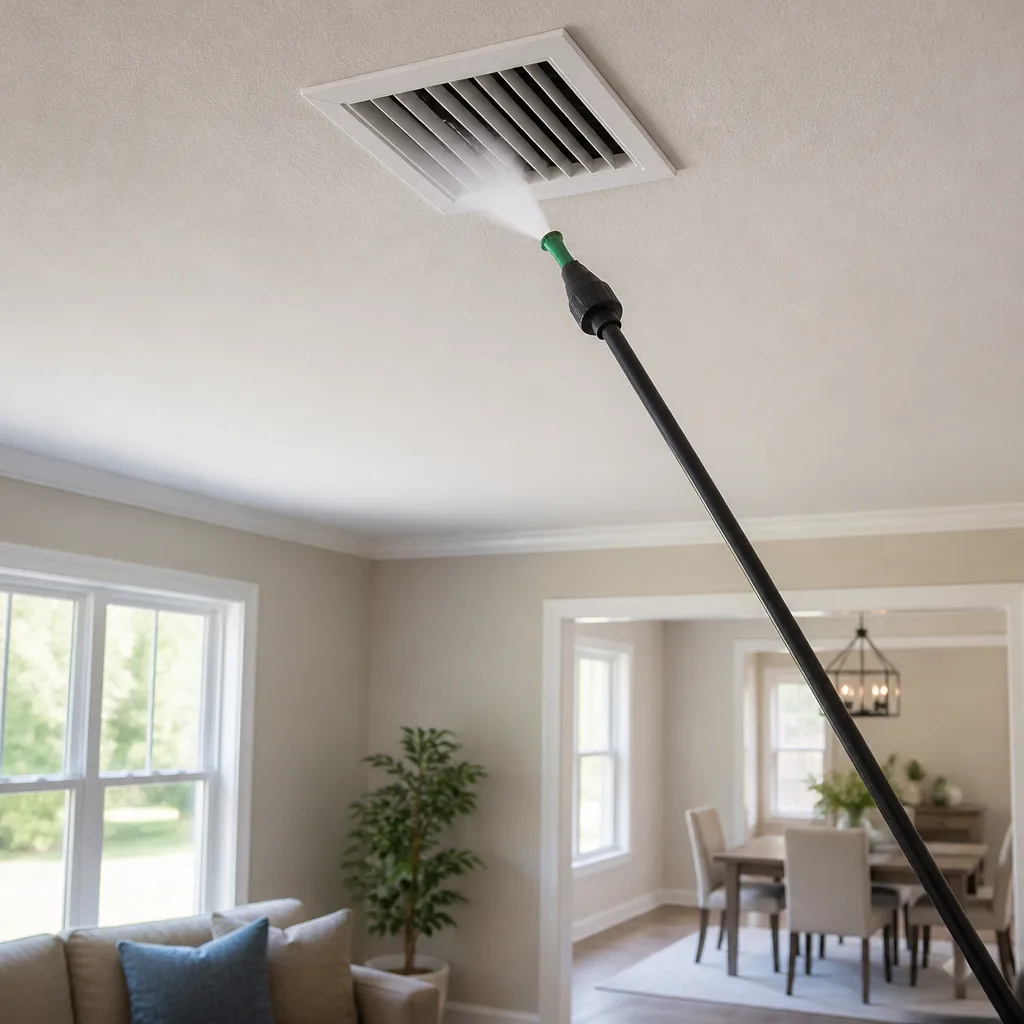 Sanitizing & deodorizing
Whole-system duct and dryer vent check with before-and-after photos - you see exactly what came out of your vents
That "$99 whole-house special" is a bait ad - the real number appears once they are in your hallway, or the "clean" is a shop-vac at the register. We photograph the inside of your ducts before and after instead.
Air Duct Cleaning Maintenance Checklist for Syracuse Homeowners
Most homeowners change the filter and figure the ducts are handled. That’s the trap. A filter catches only what happens to drift through it, while the inside of the duct network keeps collecting debris, dust, and moisture that nobody sees. Flex duct connections loosen, seams open, and condensation points grow damp in the dark. By the time the signs turn obvious, the fix is bigger than a cleaning. What follows is a maintenance calendar built around how a Syracuse home’s ducts actually behave, with checkpoints you can run yourself and the ones that belong to a professional.
Quick Answer
Air duct maintenance in Syracuse works best on a seasonal calendar, not a single annual cleaning. Homeowners should check filters monthly, inspect registers each season, and book professional duct cleaning every two to three years, plus a full HVAC cleaning and dryer vent inspection yearly. The checkpoints below are timed to Utah’s inversion season, spring dust, furnace startup, and winter stagnation.
Styles & brands we work with
- Whole-home duct cleaning
- Dryer vent cleaning
- Camera inspection
- Sanitizing & deodorizing
Table of Contents
- Monthly tasks: what you can check yourself
- Annual and multi-year professional tasks
- Syracuse seasonal calendar: March, May, October, November
- Filter logging and what rapid loading tells you
- Condensation and humidity checkpoints
- What to document before calling a professional
- Dryer vent: the separate hazard on your checklist
- Common mistakes to avoid
- When to call a professional
- Frequently asked questions
Monthly Tasks: What You Can Check Yourself
These are the checkpoints any homeowner can run in about ten minutes, no tools required beyond a flashlight. The goal isn’t to diagnose the system – it’s to catch drift early and know when a professional call is warranted.
- Pull and hold a filter up to the light. If you can see light through it evenly, it’s fine. If it’s gray or matted in patches, it’s loading unevenly, which hints at something the system is pushing through.
- Look inside every supply register. Shine a flashlight up past the grille. A light dust film is normal. Heavy buildup, dark streaks, or fuzzy growth means it’s time to schedule service.
- Check the return grille. The return is the biggest intake and it collects more than the supplies. If yours is visibly dusty after a month, your filter may be bypassing.
- Listen at the registers with the fan running. Whistling or a whooshing sound at one register usually means a loose connection or a partially blocked branch line.
- Sniff the return air. A musty or dusty smell coming out of the return (not the supply) points to debris collecting in the return trunk or a moisture problem near a coil.
- Note any wall or ceiling dust streaks near registers. Those black trails around grilles are the visual signature of air bypassing the filter and carrying dust into the living space.
Log what you see each month. Patterns matter more than any single observation. In our experience, a homeowner who records register conditions for three months can hand a technician a clearer picture than a vague description over the phone.
If any of these checks turn up heavy buildup, that’s when air duct cleaning moves from “eventually” to “this month.”
Annual and Multi-Year Professional Tasks
Professional service isn’t a single chore; it’s several tasks that run on different clocks. Here’s how we break it down for Syracuse homes.
- Yearly: a full HVAC cleaning, including the air handler, blower, and evaporator coil. Debris that collects on the blower and coil reduces airflow and can become a moisture trap.
- Yearly: dryer vent cleaning. This is a separate system from your HVAC ducts and needs its own inspection – more on that below.
- Every two to three years: a whole-system duct cleaning with a contact-vacuum brush assembly and negative-air filtration. This is the deep clean that reaches the duct walls, not just the openings.
- Every three to five years: duct sealing inspection. Sealing addresses the leaks and loose joints that let unfiltered air (from the attic, crawlspace, or garage) into the system – which defeats the purpose of cleaning.
- After any renovation or major work: a targeted cleaning, regardless of calendar position. Drywall dust travels everywhere the air goes.
On a professional visit, the tools matter. We use Rotobrush contact-vacuum brush systems to physically agitate the duct walls while a vacuum holds the debris, and Nikro negative-air machines keep the system under controlled pressure so nothing dislodges into the room. Abatement Technologies air filtration devices are deployed on-site to scrub the air while we work, so what’s released during cleaning doesn’t get redistributed through your home. That last step is what separates a real duct cleaning from a shop-vac attempt.
Syracuse Seasonal Calendar
Syracuse sits in a valley where temperature inversions trap cold air (and whatever is suspended in it) against the Wasatch Front. That geography and the sharp seasonal swings give your duct system a specific stress pattern. Here’s how the calendar maps to it.
March: Post-Inversion Season
Once inversion season breaks and the valley begins to stir, the outdoor air quality improves – but the inside of your system carries what accumulated through the winter. This is the ideal month to inspect returns, check filters for matting, and schedule a duct cleaning if you haven’t in two years. It’s also the right month for a coil inspection before the cooling season begins.
May: Pre-Air-Conditioning Startup
Before you switch the thermostat from heat to cool, check the evaporator coil and drain pan. A dry, dusty coil from winter heating will collect condensation on the first cool morning, and that moisture plus sitting dust is a recipe for growth. This is when you want to check the return and the blower compartment, and confirm that your filter is fully seated.
October: Post-Harvest and Landscaping Season
Fall landscaping, leaf mulching, and outdoor dust all feed into the intake of a home system that pulls air from inside – but that same outdoor work also introduces fine particles through every open door and window. October is a register-check month: pull every grille, look up the branch line, and note where dust has settled unevenly. It’s also a good window for dryer vent cleaning before the heavy laundry season rolls in.
November: Furnace First-Run Inspection
The first cold snaps bring the furnace online, and the first few days of operation push everything that settled into the ductwork over the summer into your living space. Expect a slight dusty smell on the first run; if it lingers more than a day or two, schedule a cleaning. This is also when duct-sealing inspection pays off, since the furnace running hard makes leaks at the plenum and flex joints more obvious.
December through February: Winter Stagnation
Doors and windows stay shut, the system runs constantly, and any mold near a condensation point has a steady supply of moisture from humidifiers and cooking. Monthly filter checks plus a return-grille inspection become the priority. If you notice a musty smell that intensifies through winter, that’s a diagnostic flag, not a seasonal nuisance.
Filter Logging and What Rapid Loading Tells You
Write it down. A filter log doesn’t have to be elaborate – a sticky note on the air handler, a calendar reminder, or a note in your phone all work. The value is in the pattern.
- Note the date and filter condition each time you change it. Use a simple scale: clean, light dust, medium, heavy.
- Compare across seasons. Two consecutive changes at “heavy” in the same period tells you something.
- Flag short-run replacements. A filter that loads up in a month or two when it should last three or four is a signal.
- Check for uneven loading. Gray corners and a bright center means air is being bypassed around the filter frame.
Rapid filter loading usually points to one of two things: a filter that’s the wrong MERV rating for your system (a very high MERV filter restricts airflow and loads faster), or a bypass issue where air is sneaking around the filter rather than through it. Uneven loading is especially telling. It’s a strong hint that the filter isn’t seated correctly or that the filter frame is warped. Bypass lets unfiltered dust hit the blower, coil, and duct walls and settle there. If your log shows a consistent short-run pattern, that’s worth a diagnostic visit – the fix is often a simple seating or frame adjustment, and it prevents a much bigger cleaning bill down the line.
Condensation and Humidity Checkpoints
Utah’s dry winters sound like good news for duct moisture, and mostly they are. But dry outdoor air plus indoor humidifiers, cooking, and showers creates a moisture mix that can condense on cold metal – which means the evaporator coil in summer and the cold supply plenum in winter are both potential wet spots.
- Check the drain pan at the coil each spring. Standing water or rust is a sign the drain line is clogging.
- Look for rust or water stains at the supply plenum seam in winter. Condensation on the cold duct metal is common in a home running a humidifier.
- Inspect the flex duct near exterior walls. Those runs are the coldest and the most prone to condensation in the winter.
- Run the bathroom and kitchen exhausts during and after use. Excess humidity in a tight, winterized home is what feeds mold in the duct interior.
In summer, the risk flips. The evaporator coil runs cold and wet, and a dusty coil in a humid home is where growth starts. A spring cleaning protects against both patterns, which is why May is on the checklist.
For homes with persistent humidity concerns, a whole-home solution is worth discussing. We work with, and install, Honeywell and Aprilaire air-quality components to manage humidity and filtration together, so cleaning and long-term air quality are addressed as one problem.
What to Document Before Calling a Professional
The most productive diagnostic calls start with notes, not a vague description. Before you pick up the phone, gather these:
- Photos of each register – supply and return – with the grille in place and with it removed, flashlight pointed up the branch line.
- Photos of your filter at the moment of replacement, plus the dates from your log.
- Any odors and where you notice them (which room, which register, how strong on a 1-to-5 scale).
- Timing of symptoms – does the musty smell intensify in the morning, after the heat runs a cycle, or on humid days? Note patterns, not single events.
- Any recent work – renovation, new furnace, change to a different filter MERV rating.
- The details of your system – home size, number of registers, whether you have a humidifier or a whole-home filter.
With those notes, a technician can often tell you on the call whether you’re looking at a cleaning, a sealing job, or a coil issue. Without them, the visit starts from zero.
Dryer Vent: The Separate Hazard on Your Checklist
Most duct cleaners either ignore dryer vents or outsource them. Ours are handled by the same team – and they need their own schedule. A dryer vent isn’t part of the HVAC system; it’s an exhaust line for a heat source, and lint buildup in that line is a leading cause of residential fires. That’s not scare language, it’s a code and safety issue every homeowner should know.
- Yearly inspection for a standard household.
- Twice yearly for a home with a large family, long dryer runs (over 15 feet with multiple elbows), or heavy pet hair in the laundry area.
- How to spot a problem between inspections: drying times getting longer, the dryer getting hot to the touch, a burnt smell, or visible lint at the exterior vent flap.
Our dryer vent cleaning uses the same equipment discipline as duct work: controlled pressure, containment, and a before-and-after check. It’s a good addition to the annual spring walkthrough.
See the difference
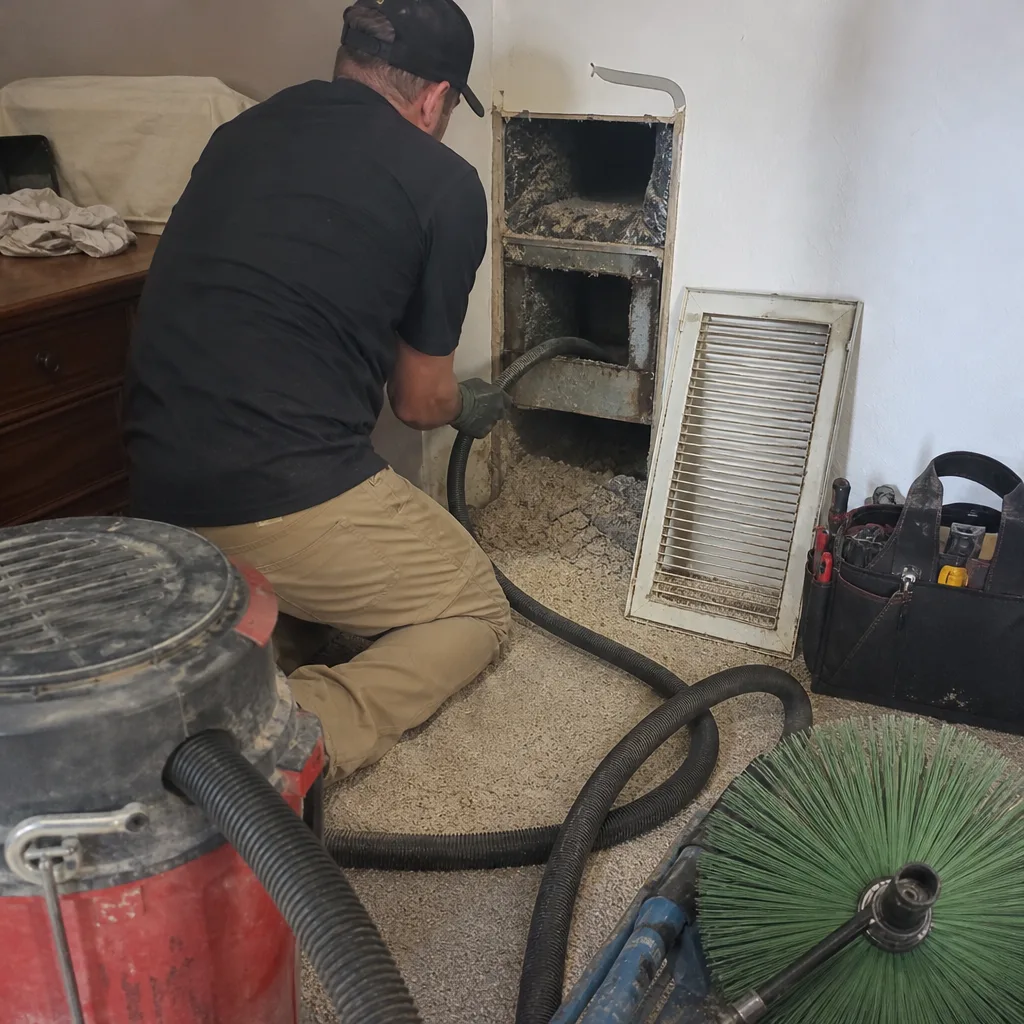 Before
 After
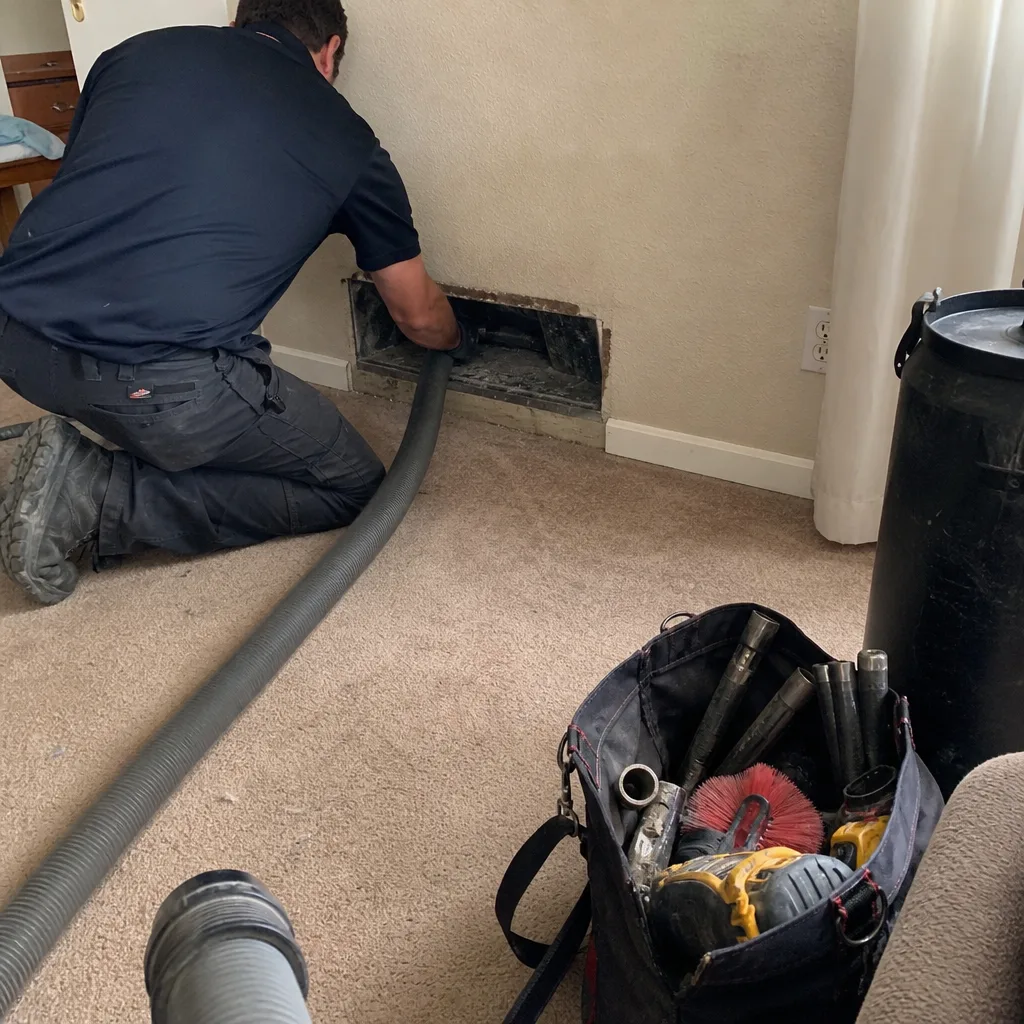 Before
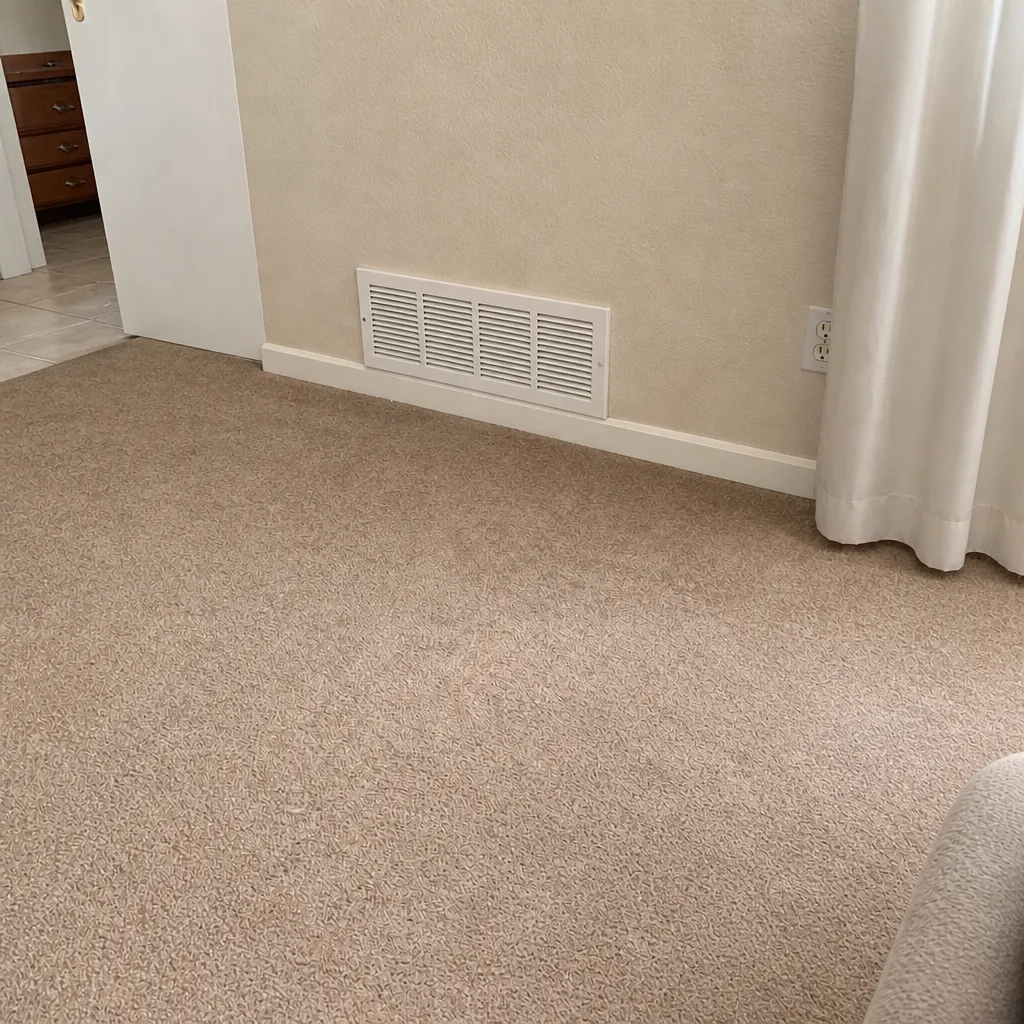 After
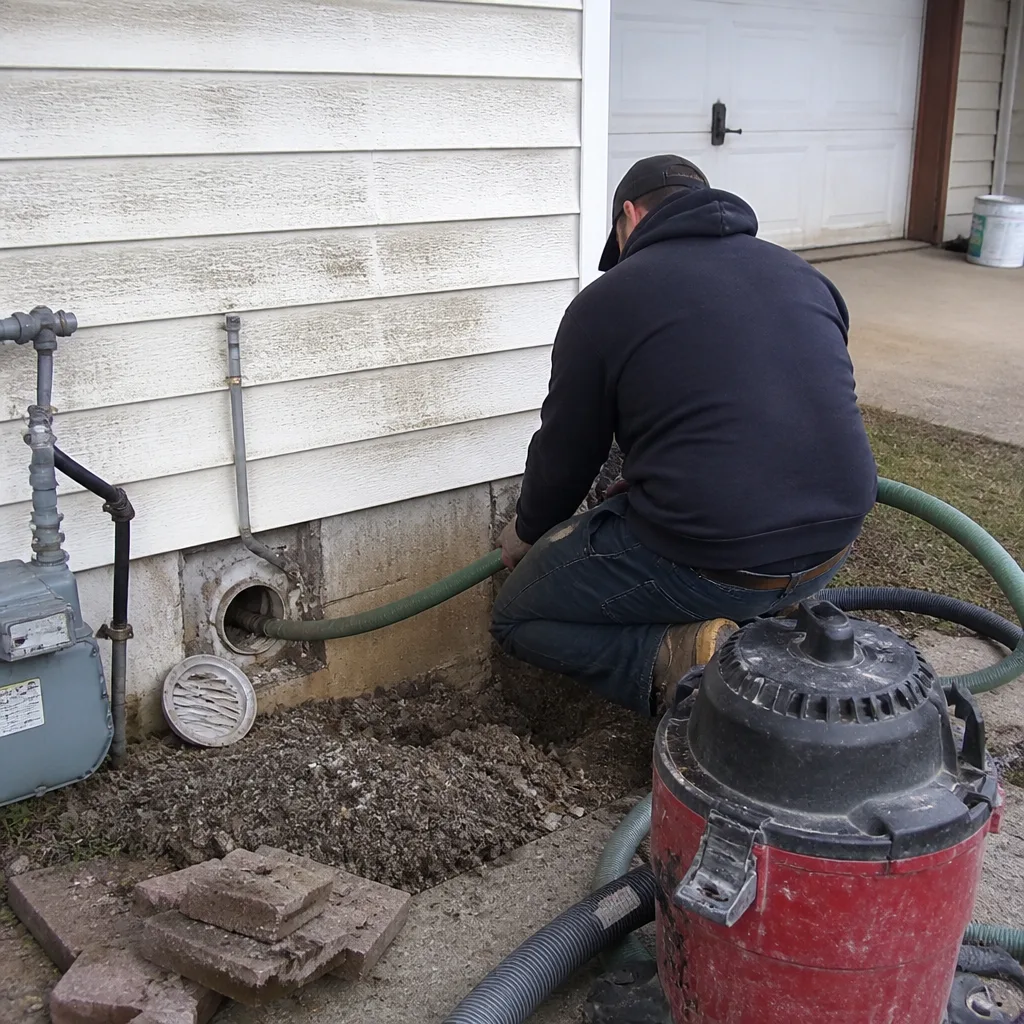 Before
 After
Common Mistakes to Avoid
- Thinking the filter is the whole system. The filter catches what passes through it; the dust that settles on the duct walls never gets filtered. A clean filter on a dirty system still circulates debris.
- Running a very high-MERV filter as a substitute for cleaning. A high-MERV filter can restrict airflow, load faster, and put extra strain on the blower. Match the rating to your system, not to a marketing label.
- Skipping the yearly coil check. In Syracuse, the spring dust plus summer humidity season is exactly when a dusty coil turns into a wet biological growth point. Cleaning the ducts without cleaning the coil leaves the source of the problem in place.
- Calling the cheapest quote first. A bargain price often means a shop-vac and a wand at the registers, with no negative-air containment. That pushes debris into the room instead of removing it.
- Assuming dryer vents clean themselves. Lint accumulates slowly and silently; by the time drying times stretch, the line may already be half-blocked. Yearly inspection is the only reliable way to catch it before it’s a fire risk.
- Ignoring uneven filter loading. A filter that loads in one corner and stays clean in another means air is bypassing it. The unfiltered dust is going where it shouldn’t.
- Doing a deep clean without sealing afterward. A cleaned system with leaking joints re-pollutes itself within weeks. The cleaning and the sealing belong together.
When to Call a Professional
You don’t need to wait for a schedule. Call a professional if you see any of these: visible debris or dark streaks inside a supply register after cleaning; a musty smell that persists after a filter change; heavy dust on the return grille after cleaning; a filter that loads in under a month; condensation, rust, or water stains at the duct seams; or a dryer that takes two cycles to dry a normal load. Each of these points to a system-level issue a shop vac can’t solve.
Syracuse Air Duct Cleaning Pros offers free estimates in Syracuse. We use professional-grade Rotobrush and Nikro equipment with Abatement Technologies scrubbers on-site, and we set one flat price per system before we start. Call (833) 549-7193. We answer 24/7. Fast dispatch from 7am to 7pm, Sunday through Friday.
Frequently Asked Questions
Every two to three years for a typical home, with a yearly HVAC cleaning and yearly dryer vent inspection. Homes with pets, allergy concerns, or a recent renovation should move to every one to two years. In Syracuse, the valley inversions push more fine particles into the system each winter, which is why the cleaning interval tends to be a bit shorter than in open terrain.
Look inside a supply register with a flashlight, then pull the return grille and look at the filter. If both show heavy dust or dark streaks, cleaning is warranted. If a technician says your ducts must be cleaned but can’t show you visual evidence before starting, ask for it – a trained professional will show you what they see and give a written, per-system estimate before any work begins.
Duct cleaning focuses on the duct network – the trunk lines, branch runs, and registers. HVAC cleaning covers the air handler, blower, and evaporator coil. Both matter, and doing one without the other leaves a source in place. We recommend scheduling them together when possible.
Usually, yes. A partially blocked dryer vent cuts airflow, so the dryer runs hotter and longer than it should. That’s a fire risk as much as a frustration. A professional dryer vent cleaning resolves the airflow issue and confirms the line is clear. If your vent runs long or has multiple elbows, it’s worth inspecting yearly.
In winter, yes – but not the way people expect. Cold metal ductwork plus indoor humidity from showers, cooking, and humidifiers creates condensation on the coldest runs, typically near exterior walls. In summer, the evaporator coil is the wet spot. Both are worth a seasonal inspection, and both are caught early with the checkpoints in this guide.
Often, yes. Cleaning removes debris, but it doesn’t close the gaps at flex joints and plenum seams. Those leaks let unfiltered air into the system, which re-pollutes your cleaned ducts. If your duct system is older or runs through an attic or crawlspace, a sealing inspection after cleaning is worth scheduling.
The Bottom Line
A duct maintenance checklist for a Syracuse home isn’t a reminder to call a cleaner every spring. It’s a short list of visual checks you run monthly, a seasonal calendar built around inversion season, spring coil startup, fall dust, and winter stagnation, and a professional schedule that pairs duct cleaning with HVAC cleaning, sealing, and dryer vent inspection. Log your filters. Look inside your registers. Write down what you see before you call. That’s how a homeowner stays ahead of a system that stays mostly out of sight – and how a diagnostic visit becomes useful rather than vague.
Written by the team at Syracuse Air Duct Cleaning Pros.