
Last updated November 24, 2026
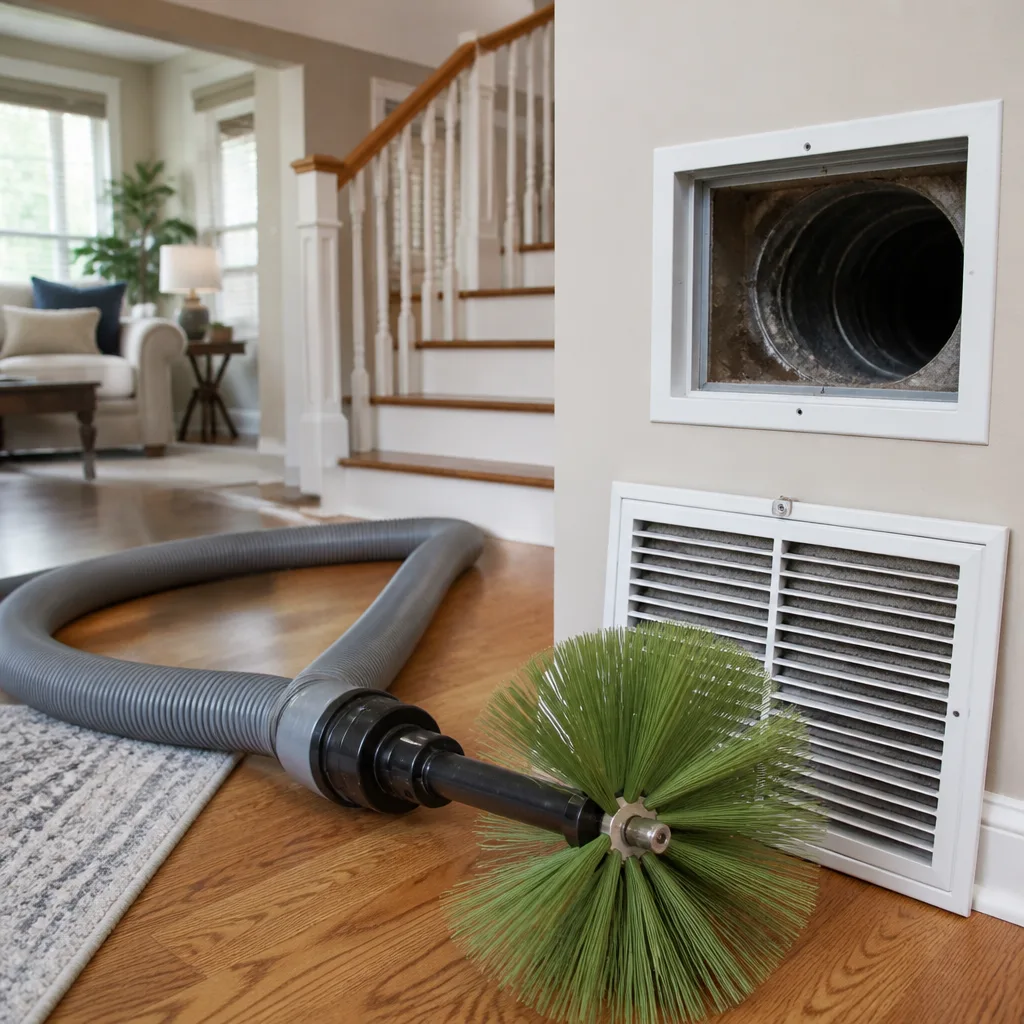 Whole-home duct cleaning
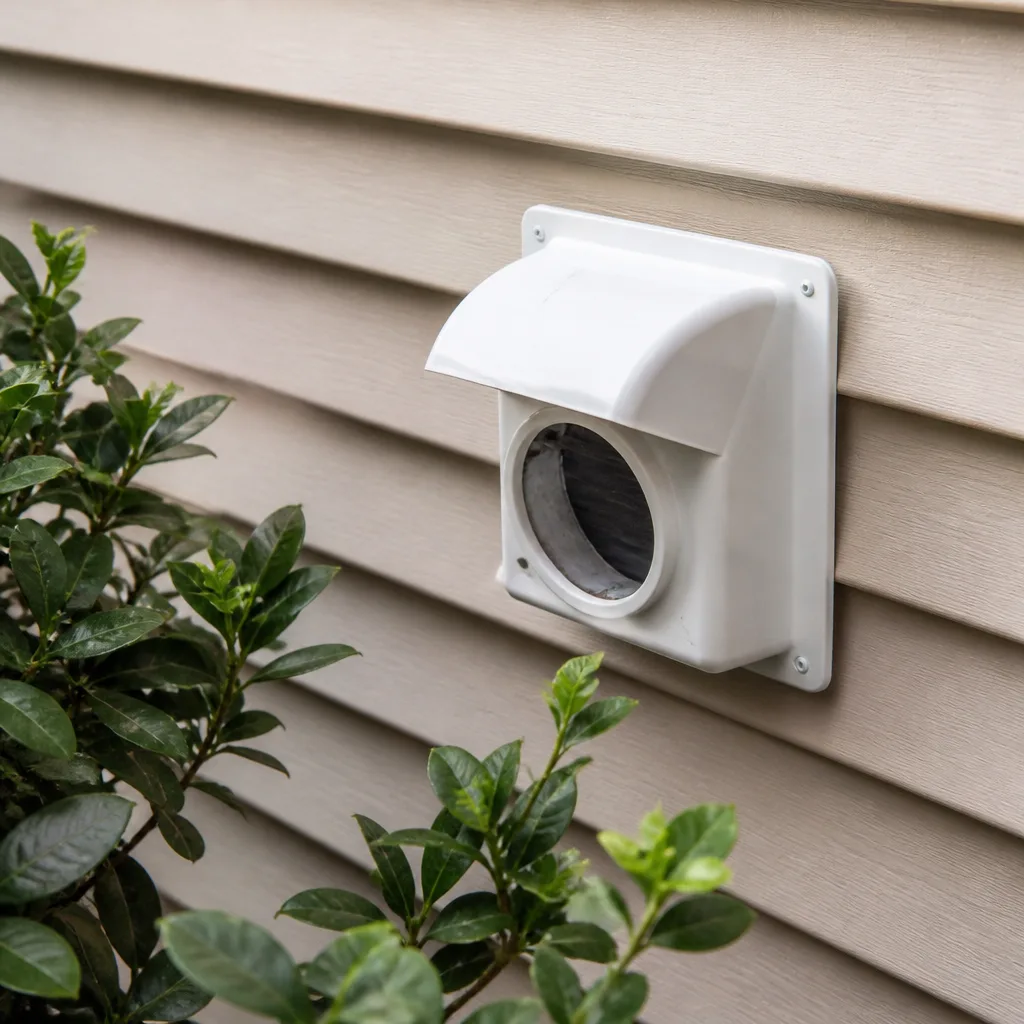 Dryer vent cleaning
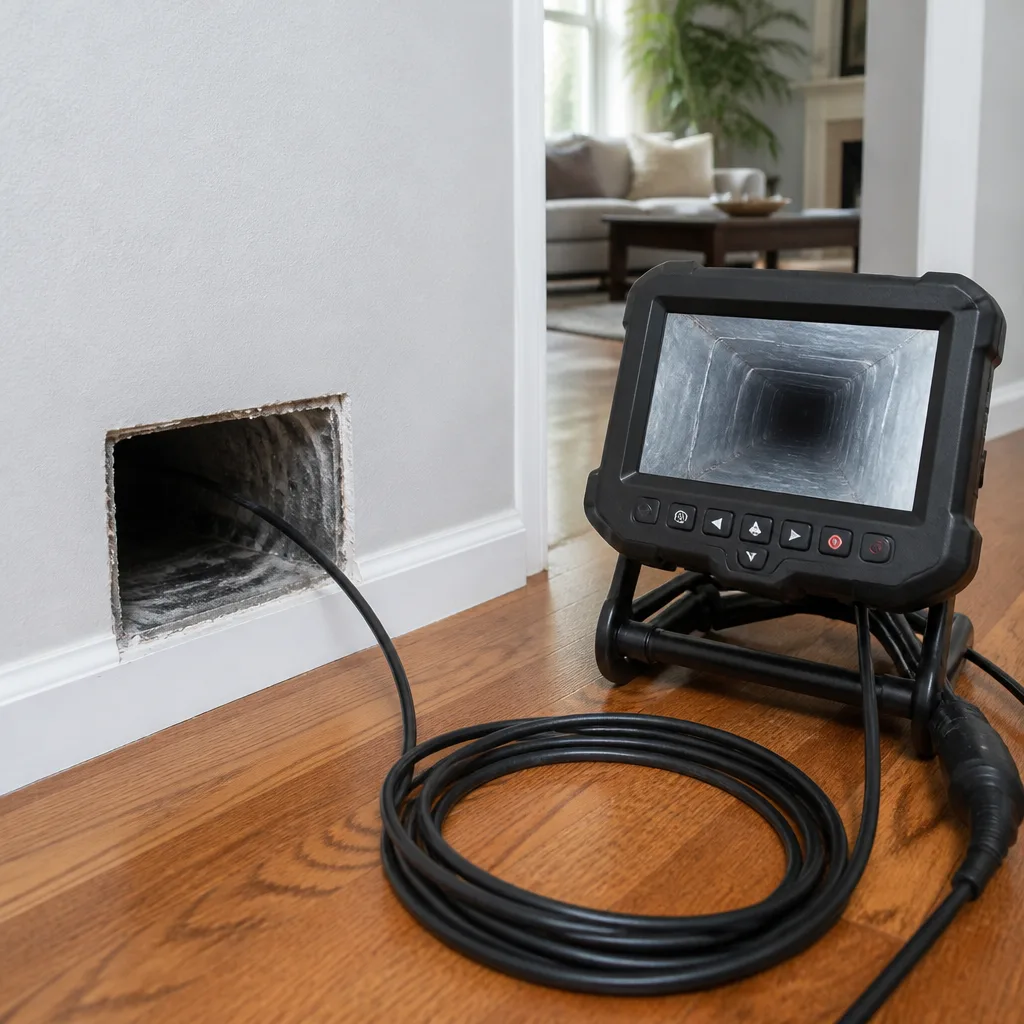 Camera inspection
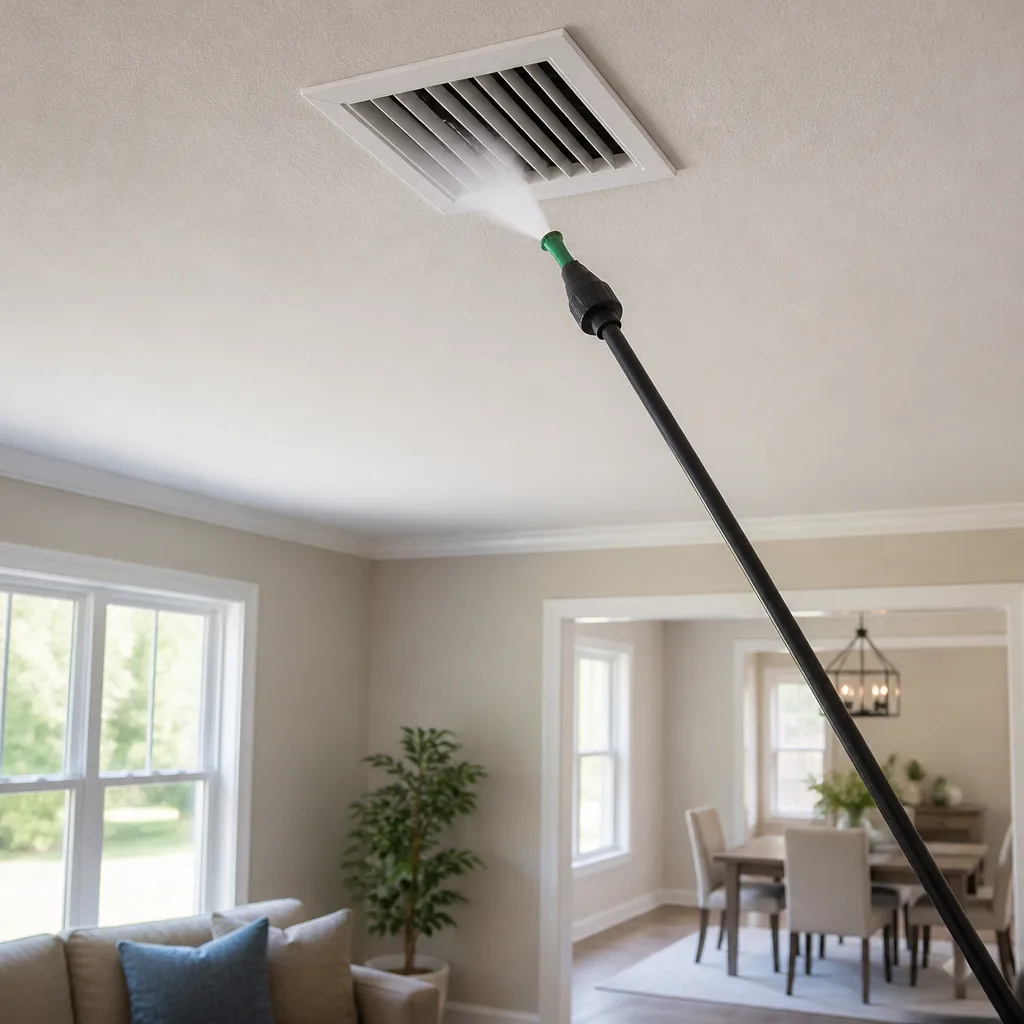 Sanitizing & deodorizing
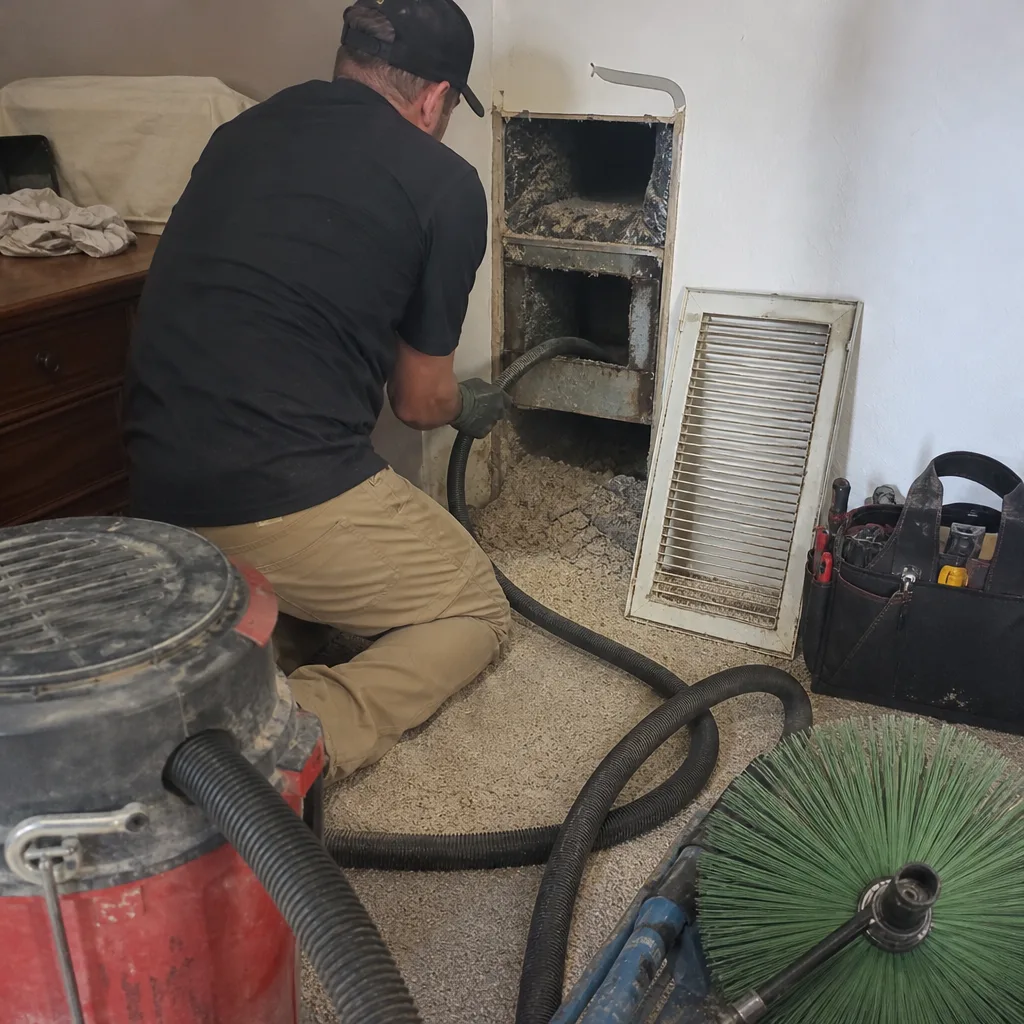
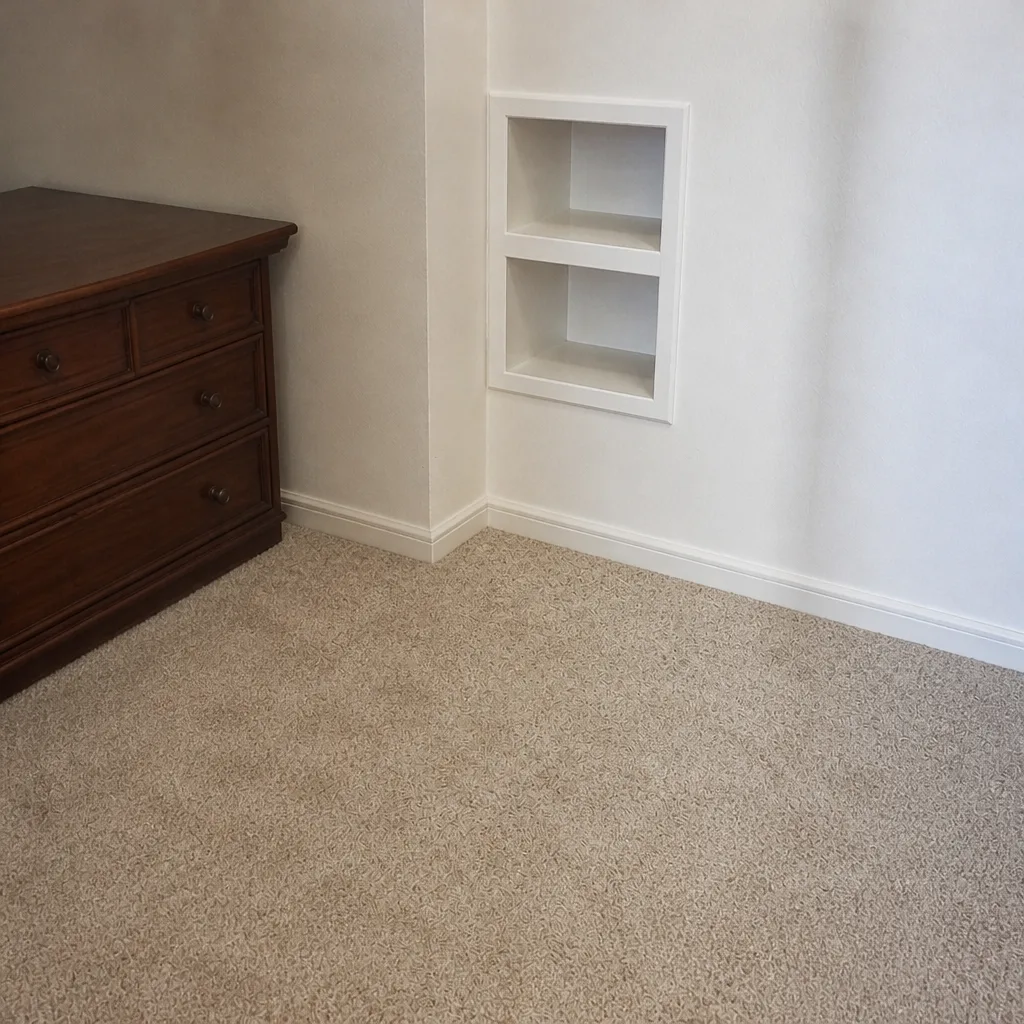
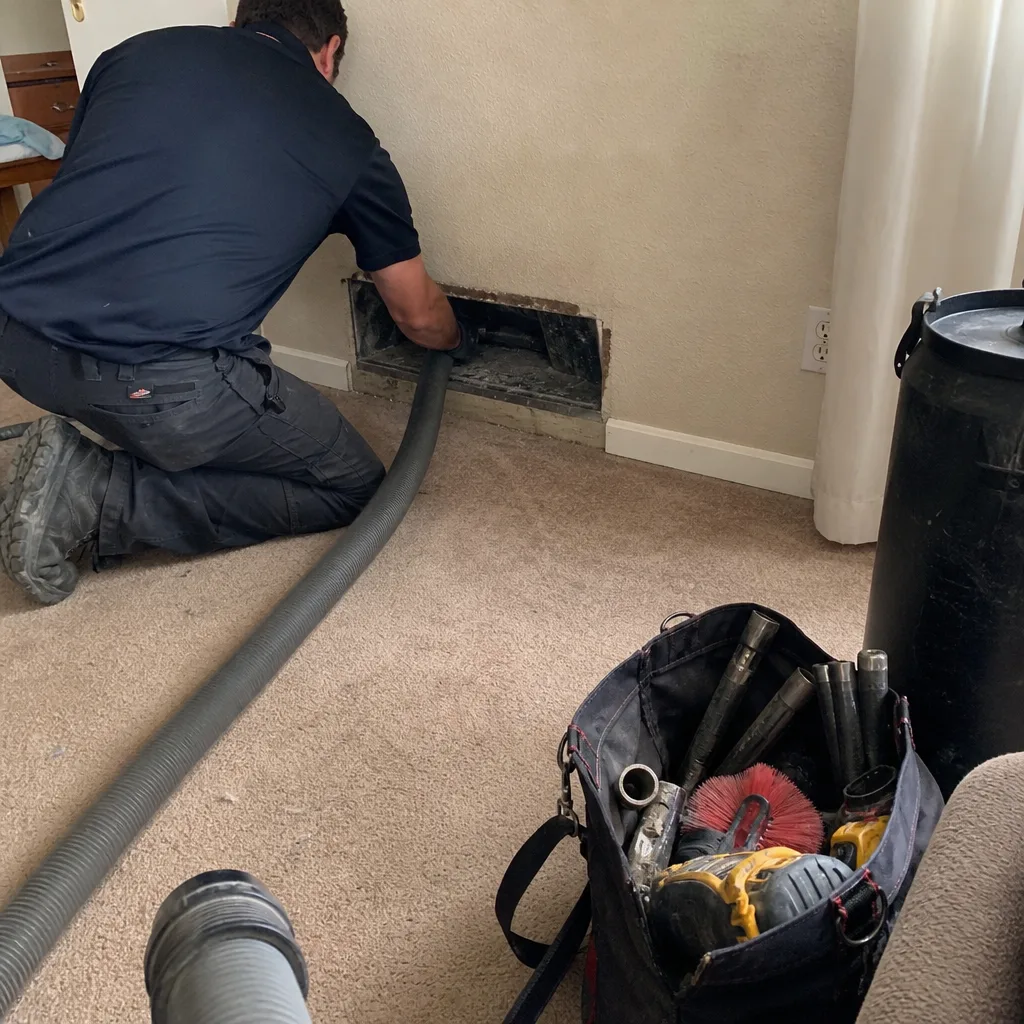
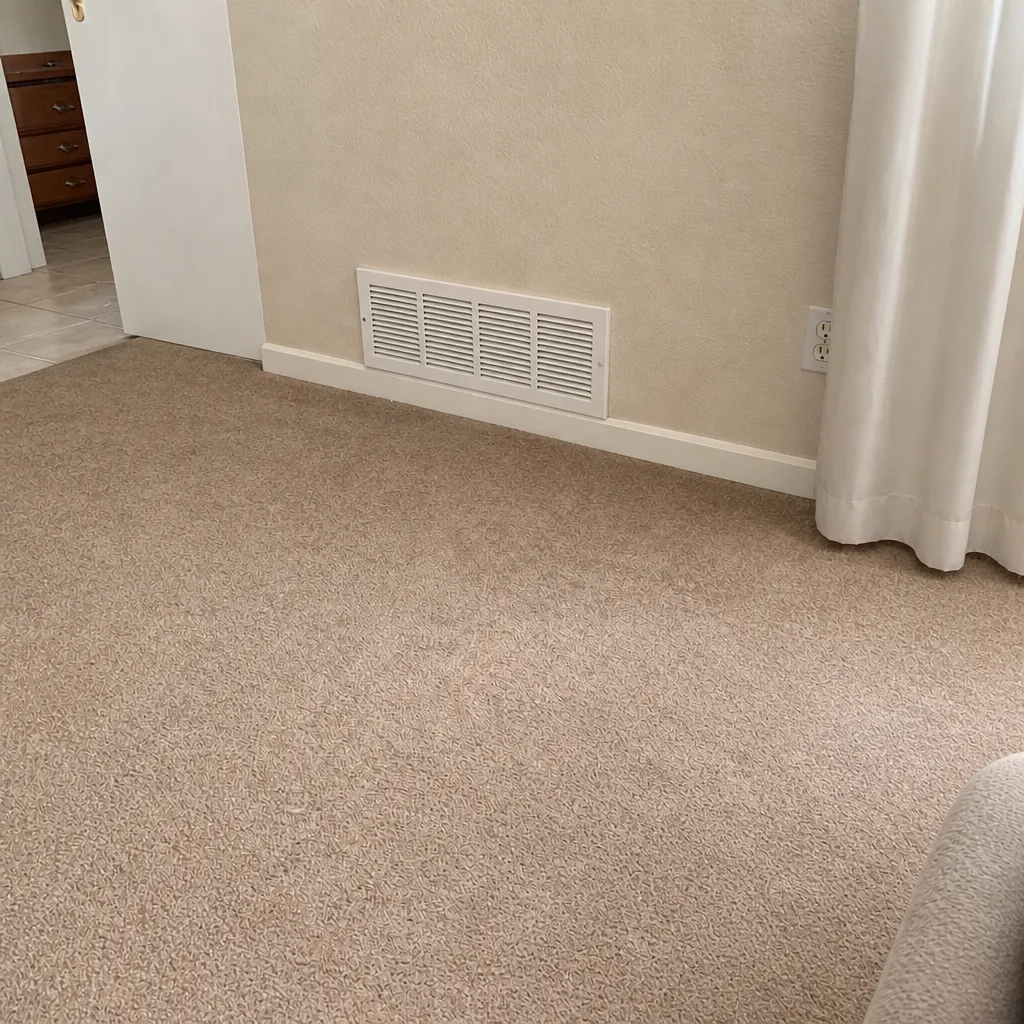
Whole-system duct and dryer vent check with before-and-after photos - you see exactly what came out of your vents
That "$99 whole-house special" is a bait ad - the real number appears once they are in your hallway, or the "clean" is a shop-vac at the register. We photograph the inside of your ducts before and after instead.
Air Duct Cleaning Permits, Codes & Inspections in Syracuse, UT: What You Need to Know
Cleaning your ducts doesn’t require a permit. That surprises most homeowners, and it’s true: routine cleaning, vacuuming, and sanitizing inside the existing duct pathway is maintenance, not construction. But the moment a technician cuts into a trunk line, replaces a collapsed flex run, or reconnects a supply or return that’s come loose, that work can cross into code-regulated territory under the mechanical code Utah has adopted. In our experience, most Syracuse homeowners learn this at closing or during an insurance review, not at the time of service. This guide maps exactly where that line falls, what documentation protects you, and how to verify the contractor doing the work is licensed for the scope they’re describing.
Quick Answer
Routine air duct cleaning in Syracuse, UT does not require a permit. Structural duct repairs, duct section replacement, and modifications to an HVAC connection may require a mechanical permit under the International Mechanical Code as adopted by Utah, and that permit is typically issued through the local jurisdiction having authority over the address. If the work changes the system rather than just cleaning it, ask the contractor for the permit number, the inspection sign-off, and a written scope before any cuts are made.
Styles & brands we work with
- Whole-home duct cleaning
- Dryer vent cleaning
- Camera inspection
- Sanitizing & deodorizing
Table of Contents
- Where the Permit Line Falls in Syracuse
- Utah’s Adopted Mechanical Code: Repair vs. Replacement vs. Alteration
- When a Duct Cleaning Scope Should Prompt You to Ask for a Permit
- Documentation That Protects You at Sale and Insurance
- Sanitizers and Air Quality Products: What Registration Actually Means
- How to Verify Contractor Compliance in Syracuse
- What an Inspection Actually Looks Like
- Why Syracuse’s Climate and Housing Stock Make Duct Work Different
Where the Permit Line Falls in Syracuse
The cleanest way to think about it: cleaning is not construction, but repair and alteration are. Air duct cleaning removes debris from a pathway that already exists. Nothing is added, moved, cut, or reconnected. Under any reading of the International Mechanical Code (IMC), which Utah has adopted as the basis for its mechanical provisions, that’s maintenance and it doesn’t trigger a permit.
Duct repair is different. The IMC regulates the installation of mechanical systems, including ductwork, and it defines requirements for materials, sizing, supports, sealing, and connections. When a contractor replaces a section of duct, reconnects a disconnected trunk line, or changes the configuration of a return air pathway, that’s mechanical work governed by code. In most Utah jurisdictions, including those covering Syracuse addresses, that scope requires a mechanical permit and an inspection after the work is complete.
Here’s the practical breakdown of what typically does and doesn’t require a permit when a duct cleaning company is on site:
- No permit typically required: cleaning, vacuuming, sanitizing within the existing pathway, replacing a flexible duct run with a like-for-like run in the same location, cleaning a dryer vent.
- Permit typically required: new ductwork, relocated ductwork, resized trunk or branch lines, changes to how a return air pathway is configured, modifications to an HVAC unit connection, replacing rigid duct sections with a different material.
- Ask your local jurisdiction: replacing a section of duct that was never properly installed to begin with, reconnecting a line that came loose after a home renovation, or any work where the duct size or routing is changing.
Most Syracuse duct cleaning jobs never reach the permit line. But the ones that do are exactly the ones where a homeowner wants to know before the cut happens, not after. Our approach when we’re scoping a job is to draw a clear line in the written estimate between cleaning and any repair work, so you can see which part of the scope is maintenance and which part may need a permit.
Utah’s Adopted Mechanical Code: Repair vs. Replacement vs. Alteration
Utah adopts the International Mechanical Code, and the code treats repair, replacement, and alteration as three different things. That distinction matters because it decides whether a permit is required and whether an inspection is needed before the system goes back into service.
Repair
A repair restores something to its original function without changing it. Re-taping a joint that’s lost its seal, tightening a connection, re-attaching a plenum that’s come loose: these are repairs. In many jurisdictions a repair of existing ductwork doesn’t require a permit, though the code still requires the repair to meet the original installation standards for sealing and support.
Replacement
Replacement removes and substitutes. If a duct section is removed and a new one is installed in its place, that’s a replacement, and many jurisdictions treat it as requiring a mechanical permit. The reason is straightforward: the new section is being installed now, and the code wants to confirm it meets current requirements, not the requirements in force when the house was built.
Alteration
Alteration is the widest category and the one homeowners underestimate. Changing duct size, relocating a supply or return, adding a run, removing a run, or changing how the system is configured all fall under alteration. Alteration almost always requires a permit, because it changes the system’s performance characteristics and how it interacts with the HVAC unit and the building envelope.
For Syracuse homeowners dealing with a home built during the rapid growth of the last two decades, the practical question is whether the ductwork is meeting the code in force today. If a duct run was sized or installed in a way that doesn’t meet current requirements, “fixing” it is an alteration, not a repair, even if the work seems small.
If you’re not sure which category your job falls into, the safest path is to ask your city’s building department directly before any work starts, and to get the answer in writing. That’s a two-minute call that prevents a very expensive conversation later.
When a Duct Cleaning Scope Should Prompt You to Ask for a Permit
You hired a cleaner, not a contractor. So it can be jarring when a technician on site says, “By the way, this trunk line is disconnected and we can fix it while we’re here.” Our rule of thumb: any time the scope of a cleaning job expands beyond cleaning, the permit question comes up first.
Use this numbered test the next time a duct cleaning quote includes work beyond cleaning:
- Is any duct material being removed and replaced? If yes, ask whether the jurisdiction treats it as a replacement requiring a mechanical permit.
- Is the duct size, shape, or route changing? If yes, that’s typically an alteration, and it typically needs a permit.
- Is the connection to the HVAC unit being modified? Plenum changes, changes to how the air handler ties in, and modifications to a return air pathway all cross the line.
- Is the work being described as “resealing” or “reconnecting”? Re-taping a joint that lost its seal is usually maintenance. Replacing the duct section that failed is usually not.
- Will the contractor pull the permit themselves, or is that on you? In most jurisdictions the licensed contractor is responsible for pulling the permit. Get the answer in writing.
- Will there be an inspection? If the work requires a permit, it requires an inspection. That’s a feature, not a bug: it’s your protection.
- Who signs off on the work? Only a contractor licensed in the correct classification can pull the permit and sign off.
Notice this list is about duct repair and alteration, not cleaning. Our role as a duct specialist is to clean the system thoroughly and honestly report what we find. When we find something that crosses into permit territory, we say so before we touch it, and we walk the homeowner through what the work is, why it’s being proposed, and what permitting looks like for the address.
There’s one more trigger worth naming: attic ductwork. In Syracuse, a lot of homes route ductwork through unconditioned attic space. That makes the ductwork subject to extreme temperature swings and heavier condensation load than ductwork inside conditioned space. When a section of attic duct has collapsed or separated, replacing it is often a repair in scope but a permit-triggering job in practice, because the replacement changes how that section handles the local conditions.
Documentation That Protects You at Sale and Insurance
Here’s where most homeowners get caught. A duct repair happens, the work looks fine, everyone’s happy, and then six years later the house goes on the market. The buyer’s inspector flags ductwork that doesn’t match the rest of the system, and suddenly the seller has to prove whether the work was ever permitted, ever inspected, and ever properly documented.
That’s not a hypothetical fear in Syracuse – it’s the exact sequence we hear about from homeowners asking us to look at existing ductwork during a pre-listing walkthrough. The work itself is usually fine. The paper trail is what’s missing.
What proper documentation for duct work looks like:
- The written scope of work, signed before the job starts. It should distinguish cleaning from repair from replacement, and identify which parts of the scope required a permit.
- The permit number, when a permit was pulled. It belongs in the homeowner’s records, along with the inspection sign-off.
- The inspection approval. A passed inspection is the single most useful document a homeowner can keep. It tells any future buyer, insurer, or appraiser that the work was reviewed by the local jurisdiction.
- Before-and-after photographs. Not a marketing nicety. A dated photo of the duct interior before the work and after it is a record of what was found and what was done, and it helps the next inspector understand the scope.
- The name and license number of the contractor. If the contractor can’t produce their license number, that’s a signal about what else may be missing.
- Any sanitizer product used, with the product label and registration information. We cover that in the next section.
For Utah home sale disclosures, unpermitted HVAC modifications are one of the standard red flags a buyer’s agent will ask about. Being able to produce the permit number and the inspection sign-off doesn’t just protect the sale. It protects the price the buyer is willing to pay, because a buyer who sees an unpermitted repair has to price in the cost of redoing it correctly.
If you’re buying a home in Syracuse and the seller discloses that ductwork was replaced or modified, ask for the permit number before you sign anything. If they can’t produce it, ask whether the work was completed under permit and whether the city was ever notified. That’s a 10-minute conversation and it’s worth having.
Sanitizers and Air Quality Products: What Registration Actually Means
Duct sanitizing is a standard part of our service menu, and it’s the part of the job where the products matter more than the equipment. When a technician sprays a chemical inside your ductwork, that chemical becomes airborne in the space your family breathes. That’s why the regulatory questions matter.
In the United States, sanitizing and antimicrobial products applied inside HVAC systems are generally regulated as antimicrobial pesticides under the Federal Insecticide, Fungicide, and Rodenticide Act (FIFRA), which is administered by the Environmental Protection Agency. EPA registration means the product has been reviewed for the specific use it’s labeled for, including use inside HVAC systems. It does not mean the product is universally safe, and it does not mean it’s appropriate for every situation. It means the manufacturer has submitted the use pattern to EPA and EPA has approved it for that use.
Utah’s Department of Environmental Quality regulates air quality across the state, but product registration for HVAC sanitizers is a federal matter administered through the EPA. When a contractor tells you a sanitizer is “EPA registered,” ask two questions back:
- Is it registered specifically for HVAC system use? Many antimicrobial products are registered for hard surfaces or food-contact surfaces. HVAC use is a specific registration category, and it’s not interchangeable.
- Will I get the product label in writing? The label is the legal use document. A contractor who can’t produce the label for the product they’re using is asking you to trust them over the manufacturer’s own documentation.
Beyond sanitizers, some duct cleaning companies also install air-quality components as part of a longer-term strategy. We work with Honeywell and Aprilaire components because they’re widely specified in residential systems and produce a clear paper trail of parts, model numbers, and installation instructions. Air-quality upgrades aren’t cleaning, and they’re not required. But if you’re going to install one, the same documentation standard applies: part number, install date, and a record of who did the work.
One caution worth naming. Sanitizing is a chemical application inside a system that runs throughout your home. Anyone who waves off the question of product label and registration is telling you something about how they treat the rest of the job. If you want the sanitizing to be part of your service, it’s fair to ask for the label before work starts.
How to Verify Contractor Compliance in Syracuse
Utah’s Division of Occupational and Professional Licensing (DOPL) is the state agency that licenses contractors. Anyone doing duct repair or duct replacement in Syracuse for compensation is required to hold a contractor license in the correct classification, which for duct work generally falls under a mechanical contractor classification rather than a general handyman license.
That distinction is the one most homeowners miss. A handyman who is licensed for general property maintenance is not licensed for mechanical work. A duct cleaning company that offers “duct repair” as an add-on may or may not be licensed for the mechanical scope, and it’s worth confirming before any work that requires a permit is proposed.
Here’s the step-by-step verification sequence we recommend to every Syracuse homeowner considering duct repair work:
- Ask for the Utah contractor license number in writing. Not a business name, not a business license, not a “we’re licensed” promise. The license number.
- Look up the license number on the Utah DOPL license lookup. Confirm the classification, the status (active is what you want to see), and the expiration date.
- Confirm the classification covers mechanical work. A license classified for general building work is not the same as a mechanical classification.
- Ask whether the company carries liability insurance and workers’ compensation. Utah DOPL requires proof of both for most license classifications, and a license lookup will generally show whether those requirements are met.
- Ask who will pull the permit. If the answer isn’t the licensed mechanical contractor, that’s worth asking a follow-up question about.
- Ask for a certificate of insurance for the specific job. This is normal business practice and any legitimate contractor will provide one.
These six steps are also what a buyer’s agent will run when you sell the home. Doing them before the work starts means the file is already clean when it matters.
When you call a duct cleaning company in Syracuse, this is the kind of vetting question they should welcome. A company that can’t answer “what’s your license number” and “who pulls the permit” isn’t the company for any scope beyond cleaning.
What an Inspection Actually Looks Like
If your duct work required a permit, the local jurisdiction will send an inspector after the work is complete. The inspection isn’t a code-compliance audit of the whole house; it’s scoped to the work that was permitted. For a duct repair, that means the inspector reviews the specific ductwork in the permit scope, checks that it’s installed according to code, and signs off on the job.
What the inspector will generally look at for a duct permit:
- Materials and sizing. The duct material, gauge, and dimensions match the permitted plans.
- Support and connections. Ductwork is properly supported and the connections are sealed.
- Clearances. Ductwork maintains required clearance from combustibles and other systems.
- Access. The system is accessible for future inspection and maintenance, which is also why duct cleaning has to be able to reach it.
- Sealing at the HVAC unit connection. The transition between the ductwork and the air handler is one of the most common failure points.
The inspection is often quick, and it’s not supposed to be adversarial. It’s a confirmation step, and a passed inspection is the cheapest insurance you’ll ever buy on duct work. A failed inspection means something is off, and the contractor has to correct it and request a re-inspection.
In Syracuse, as in most Utah jurisdictions, the inspector is familiar with the local housing types: standard basements, attics with HVAC equipment, and duct systems that have been worked on more than once as owners have upgraded the HVAC unit. A good inspector carries the history of the address in the system, and that history is part of your file.
Why Syracuse’s Climate and Housing Stock Make Duct Work Different
Syracuse sits in Davis County, on the bench between the Great Salt Lake and the Wasatch foothills, and that geography shapes what happens inside a duct system in ways that matter for repair and inspection.
The most important fact is the swing. Syracuse gets cold winters, hot dry summers, and a wide gap between indoor and outdoor humidity. Attic ductwork in this climate sees the extremes on both ends, which puts more load on joints, seals, and flexible connections than ductwork in a milder climate would see. When those joints fail, the failure often shows up as a comfort complaint first and a code-compliance question later.
Spring and early summer in this part of Utah also bring the inversion-driven air quality patterns that Davis County is known for, and homeowners here tend to pay closer attention to indoor air than in most of the country. That drives real demand for duct sanitizing and air-quality upgrades. It also drives demand for careful work: if the duct system is being cleaned and sealed and treated, the documentation and the product records matter more, because the homeowner is treating the duct system as part of a broader air-quality strategy rather than just a one-time maintenance task.
The housing stock matters too. Syracuse grew fast, and much of the housing stock in the newer neighborhoods was built during a period when the mechanical code had already tightened requirements around duct sealing, sizing, and support. Homes built before those requirements tightened sometimes have duct systems that don’t match what would be installed today. When a duct repair on one of those older systems is proposed, the question of whether it’s a repair or an alteration depends on whether the new work brings the system up to today’s code or just matches the old standard.
That’s a real conversation to have with your contractor before the work starts. And it’s a conversation a duct cleaning company should be willing to have, because cleaning is the entry point, not the end of the job.
Common Mistakes to Avoid
- Assuming “duct repair” is always maintenance. Duct repair ranges from re-taping a joint to replacing a collapsed section of trunk line. The first is maintenance, the second is mechanical work that may require a permit. Ask where your scope falls before work starts.
- Not asking for the permit before the cut. Once the original duct section comes out, the permit question becomes a negotiation about a completed job instead of a plan. Ask first.
- Accepting a verbal scope instead of a written one. In Syracuse, the written estimate is the document your buyer’s agent will want to see, and a verbal scope has no paper value. Get it in writing before the technician starts.
- Trusting “we’re licensed” without a license number. A license number is verifiable on DOPL in seconds. A verbal claim isn’t verifiable at all.
- Not asking for the sanitizer product label. Product registration isn’t a marketing detail. It’s the legal use document, and it should be available for any chemical applied inside your ductwork.
- Treating before-and-after photos as optional. Photos are your record of what was found and what was done. Without them, the next inspector, insurer, or buyer has to take your word for it.
- Mixing duct cleaning and duct repair into one transaction. These are two different scopes with two different documentation standards. Keeping them distinct in the paperwork protects you at sale and insurance review, and it makes the cost of each one clear.
See the difference
 Before
 After
 Before
 After
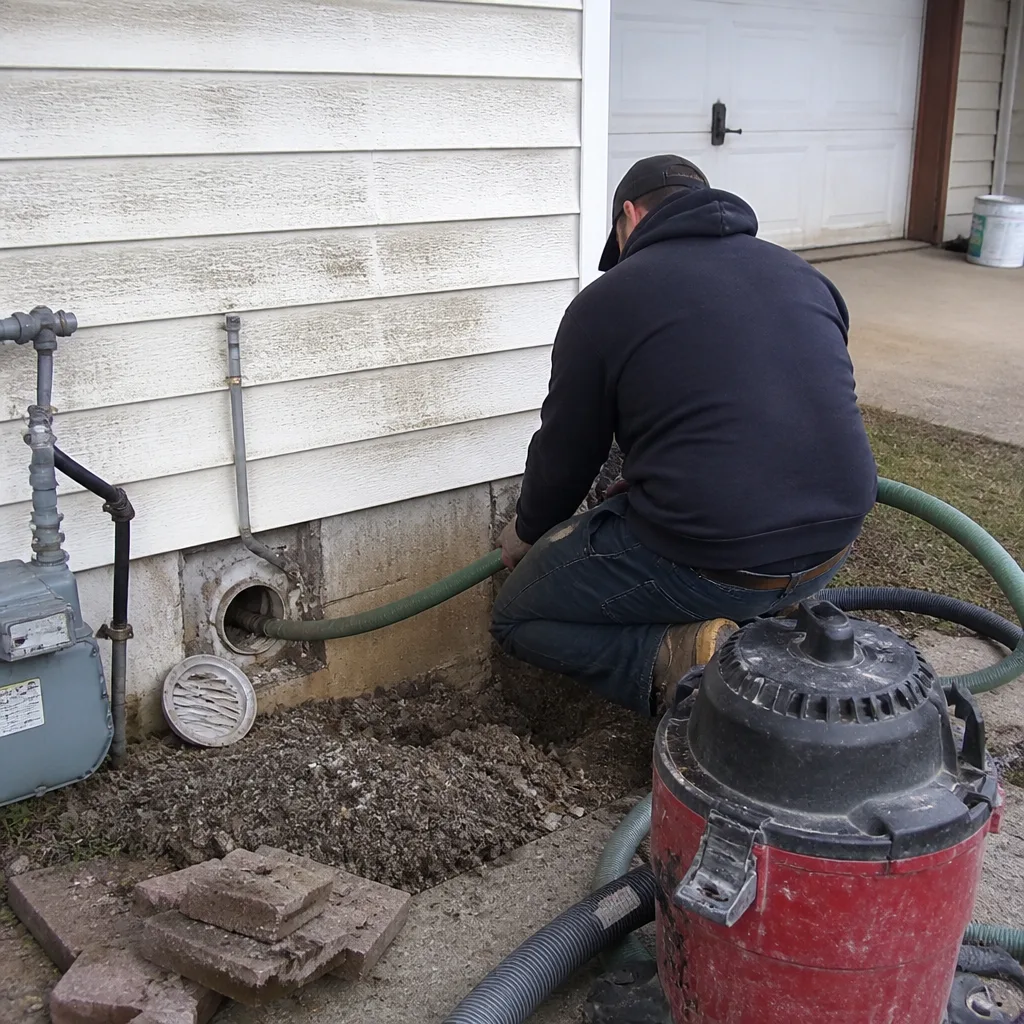 Before
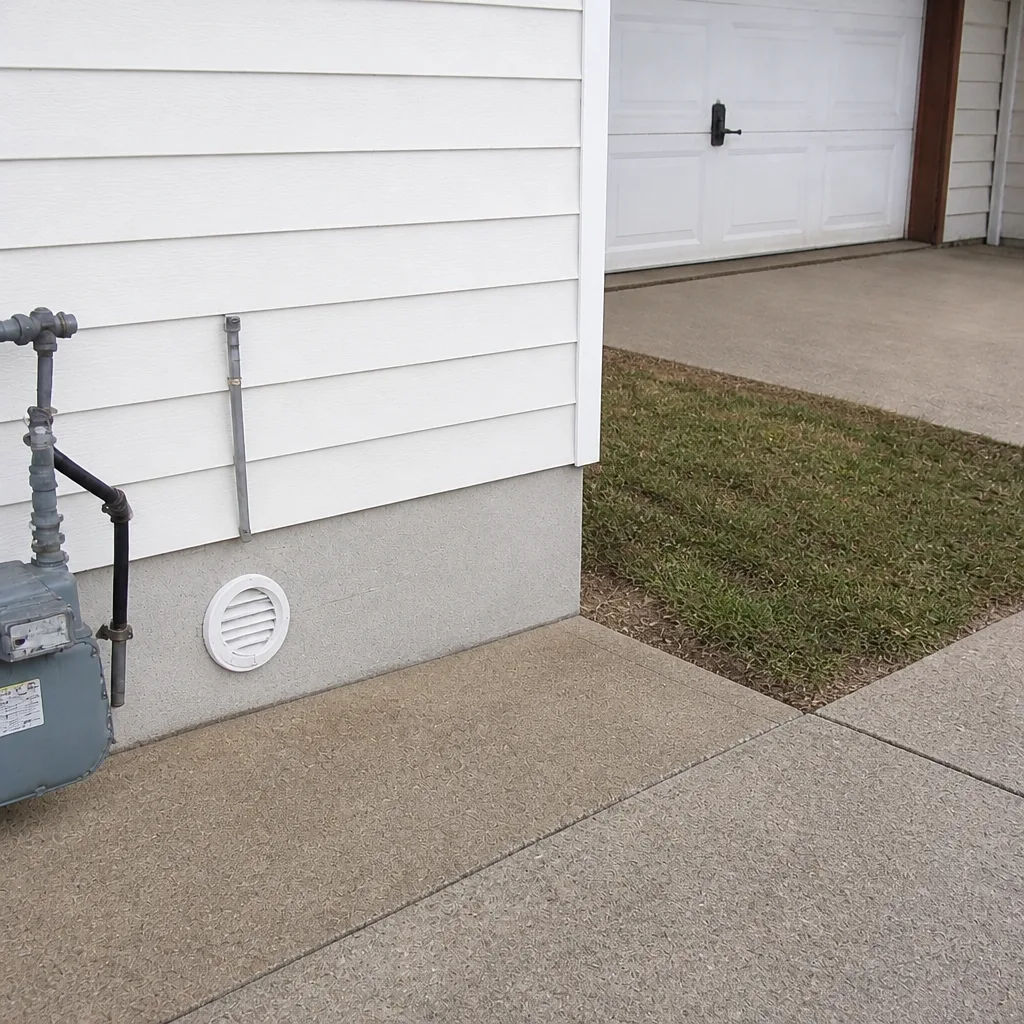 After
When to Call a Professional
If your ductwork is intact and simply overdue for cleaning, the permit and code questions aren’t your concern – routine air duct cleaning doesn’t require a permit. If you’re seeing disconnected duct sections in the attic, dust streaks at joints that keep coming back after cleaning, a return air pathway that feels weak, or a system that’s never been properly inspected, that’s when it’s worth having a specialist look at the full pathway before you commit to a scope. The same logic applies to a HVAC cleaning visit that uncovers a duct problem the equipment check alone wouldn’t find, and to a dryer that’s taking far longer to dry than it used to, which is a sign of a fire-risk hazard most duct cleaners ignore – a standalone dryer vent cleaning should be part of that conversation. Syracuse Air Duct Cleaning Pros offers free estimates in Syracuse – call (833) 549-7193. We answer 24/7. Fast dispatch from 7am to 7pm, Sunday through Friday. The estimate is written, per job, and the price is set before any work begins.
Frequently Asked Questions
No, routine air duct cleaning in Syracuse does not require a permit. Cleaning, vacuuming, and sanitizing within the existing duct pathway are maintenance, not construction. Structural repair, replacement, or alteration of the ductwork may require a mechanical permit under the International Mechanical Code as adopted by Utah, so the permit question depends entirely on whether the scope is cleaning or construction. Call (833) 549-7193 for an exact scope and a written estimate – estimates are free.
If any duct material is being removed and replaced, the duct size or route is changing, or the connection to the HVAC unit is being modified, it likely requires a mechanical permit. Re-taping a joint that’s lost its seal is generally maintenance; replacing a duct section that failed is generally not. When in doubt, call your city’s building department before work starts. Call (833) 549-7193 and we’ll walk you through a scope before you commit.
EPA registration means the product has been reviewed by the Environmental Protection Agency for the specific use pattern on its label. For duct sanitizing, that use pattern needs to be HVAC system use specifically, not just hard-surface antimicrobial use. Ask for the product label before any chemical is applied inside your ductwork. Call (833) 549-7193 for an exact quote – estimates are free.
Ask for the Utah contractor license number in writing, then look it up on the Utah DOPL license lookup to confirm the classification, active status, and expiration date. Duct repair work should fall under a mechanical contractor classification, not a general handyman license. A company that can’t produce a license number is telling you something. Call (833) 549-7193 for a written scope that names the license and the classification.
It can. Utah home sale disclosures include HVAC modifications, and a buyer’s agent will typically ask for the permit number and inspection sign-off on any duct repair that appears on the disclosure. Without those, the buyer has to price in the cost of redoing the work correctly. The fix is simple: keep the permit number, the inspection sign-off, and dated before-and-after photos with the house records. Call (833) 549-7193 if you need a second look before listing.
Cleaning and repair are priced separately because they’re different scopes with different documentation standards. Cleaning is one price per system; repair is a per-job estimate written before work starts. We don’t quote a cleaning price and then surprise you with repair costs after the technician is on site. Call (833) 549-7193 for an exact quote – estimates are free.
The Bottom Line
Routine duct cleaning in Syracuse doesn’t require a permit. Duct repair and alteration often do, and that distinction is the one most homeowners learn too late. If the scope of work involves removing duct material, changing duct size or routing, or modifying the HVAC connection, confirm the permit requirement before any work starts. Keep the permit number, the inspection sign-off, the written scope, and dated before-and-after photos with your house records, because a clean file is worth real money at resale and insurance review. Verify the contractor’s Utah DOPL license classification before you hire for repair work, and ask for the sanitizer product label before any chemical is applied inside your system. Cleaning is what we do; the permit question is what protects you when the work crosses that line.
If you’re ready to have your ducts looked at by a specialist who will draw that line clearly and put it in writing, Syracuse Air Duct Cleaning Pros offers free estimates in Syracuse – call (833) 549-7193 for a written, per-job estimate before any work begins. We answer 24/7. Fast dispatch from 7am to 7pm, Sunday through Friday.
Written by the team at Syracuse Air Duct Cleaning Pros.