
Last updated November 24, 2026
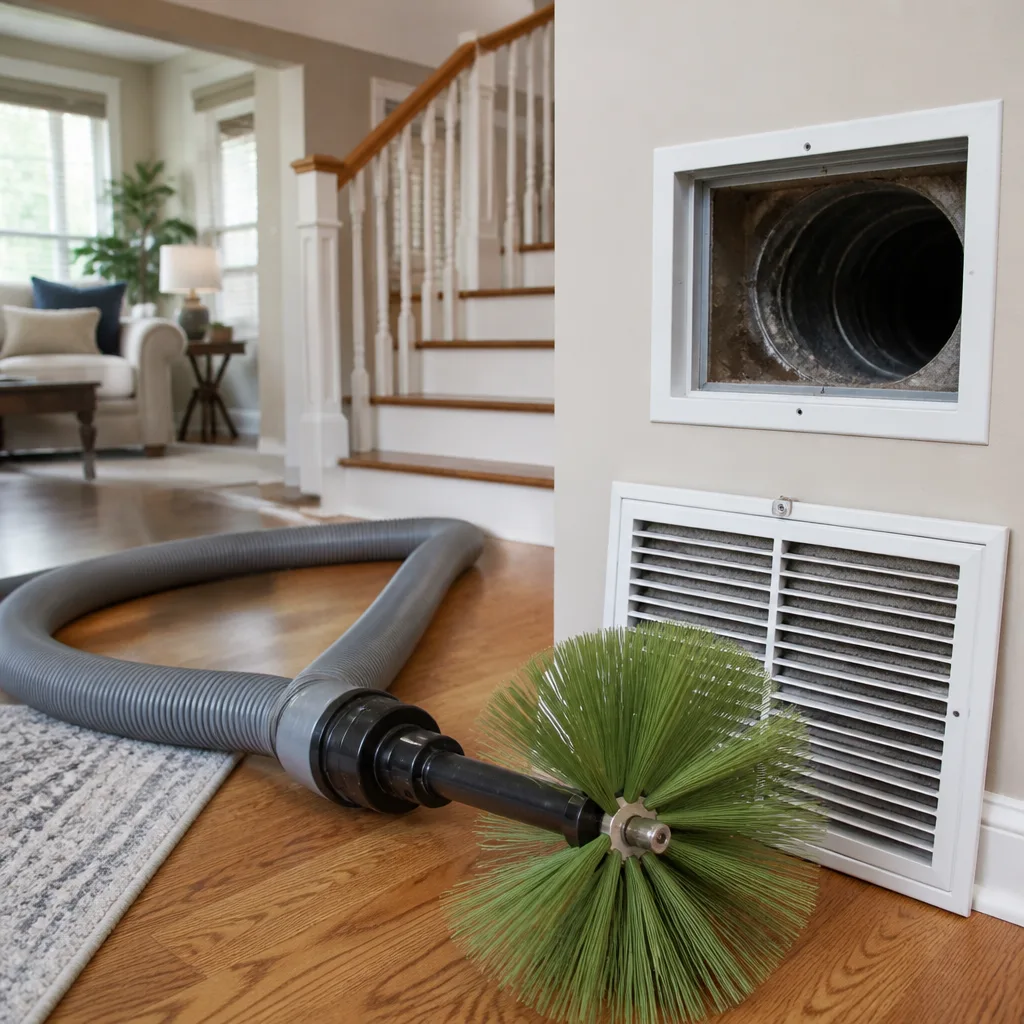 Whole-home duct cleaning
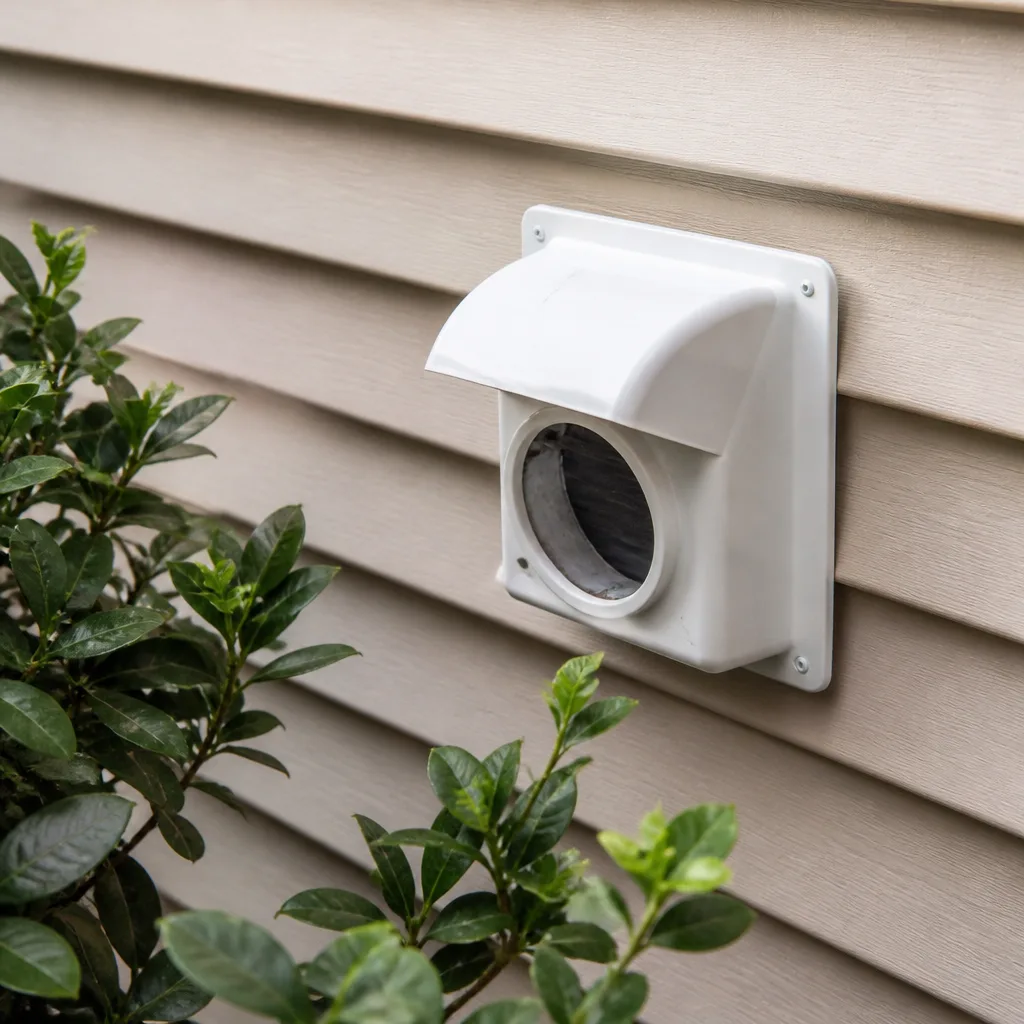 Dryer vent cleaning
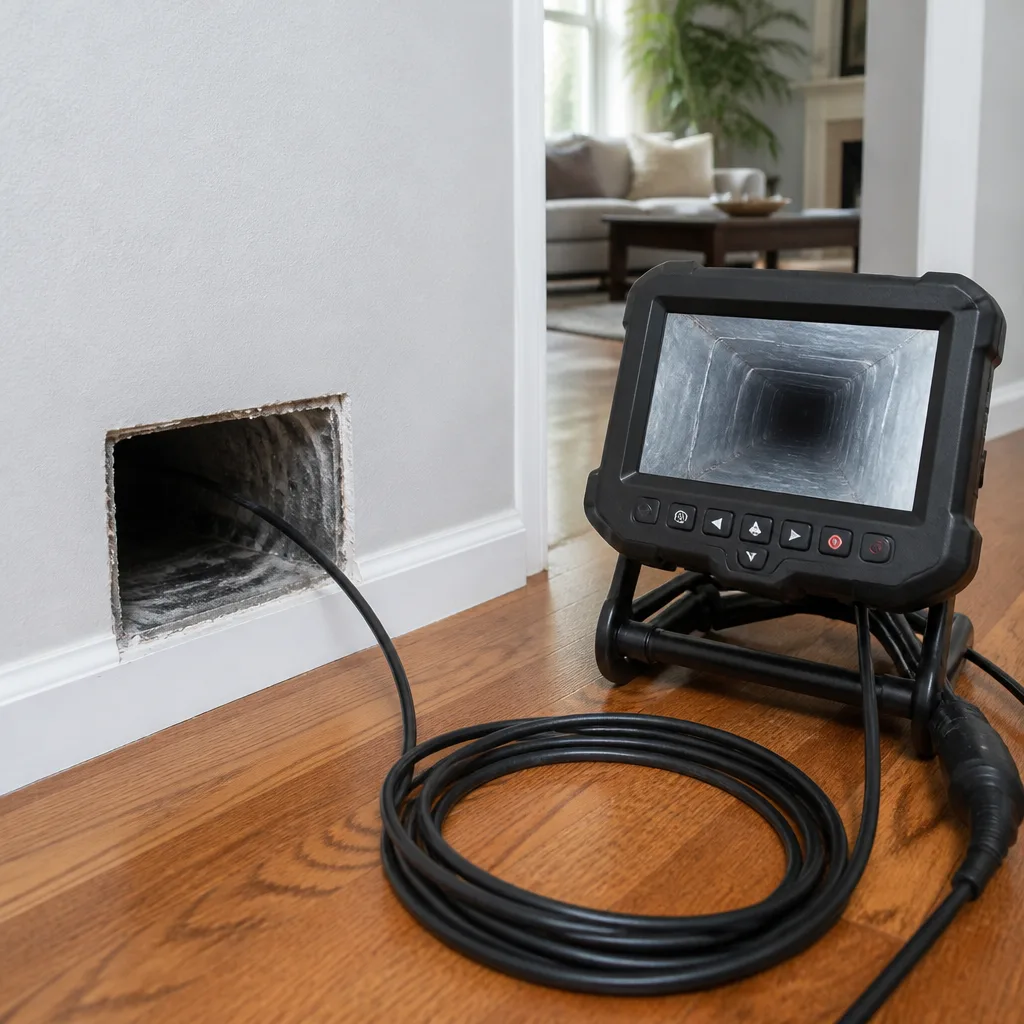 Camera inspection
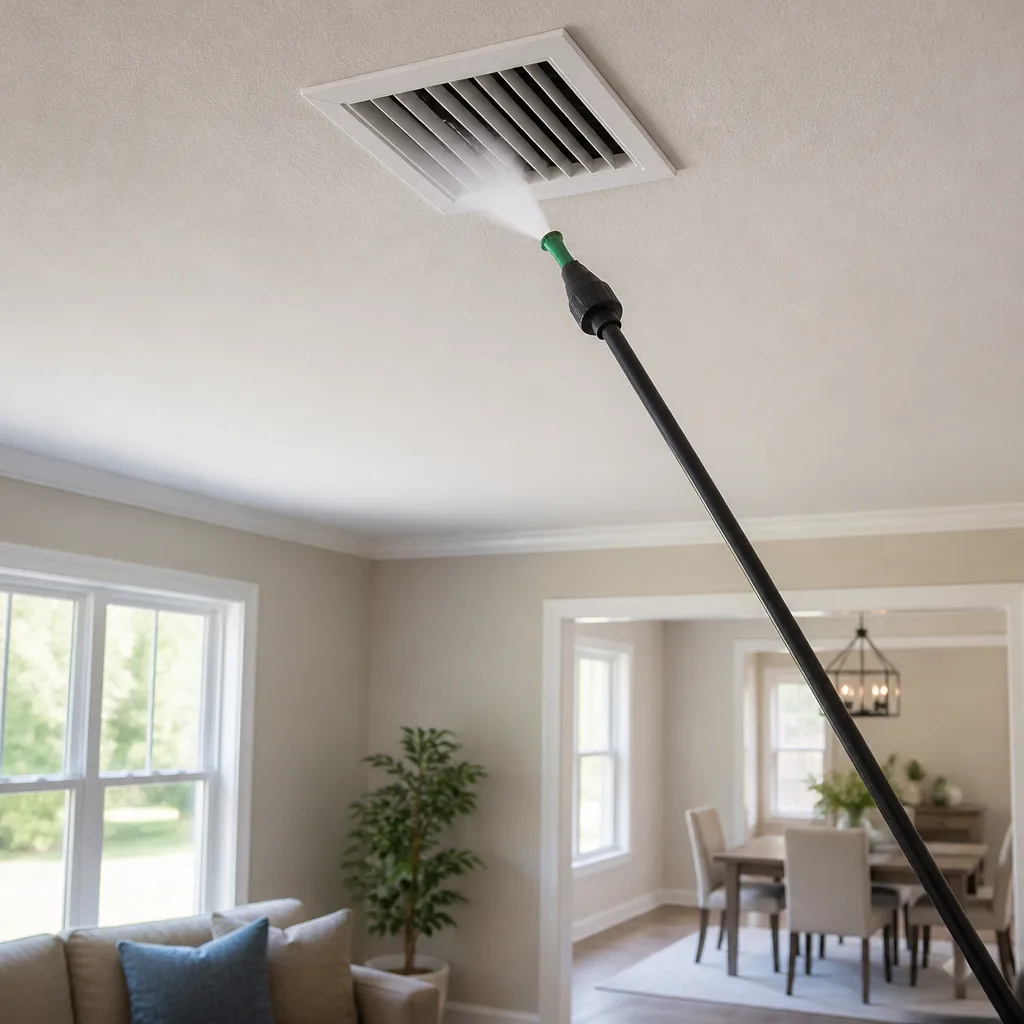 Sanitizing & deodorizing
Whole-system duct and dryer vent check with before-and-after photos - you see exactly what came out of your vents
That "$99 whole-house special" is a bait ad - the real number appears once they are in your hallway, or the "clean" is a shop-vac at the register. We photograph the inside of your ducts before and after instead.
The Complete Guide to Air Duct Cleaning in Syracuse
Most “whole-home” duct cleanings miss a big part of your system. A crew that only runs a vacuum down the main trunk lines leaves the branch runs, register boots and return chases largely untouched. In a Syracuse home, that’s often a third or more of the ductwork still holding whatever settled there over the winter. The problem isn’t laziness. It’s method. Ducts aren’t a set of separate tubes; they’re one pressurized loop, and if you clean one half without controlling airflow through the other, you just push debris around. This guide explains what a complete cleaning actually involves, how northern Utah’s inversion winters change the math on how often you need one, and how to tell a real system-level job from a surface wipe.
Quick Answer
A complete air duct cleaning in Syracuse cleans the entire pressurized system, not just the visible runs: supply and return trunks, branch ducts, register boots, the air handler coil and blower wheel. It uses negative-pressure containment and contact brushing to remove debris rather than redistribute it, and it ends with a verification step so you can see the work was done. How often you need one depends on your home, but in Syracuse’s inversion winters and new construction dust, most homes benefit from an assessment every few years rather than a fixed calendar.
Styles & brands we work with
- Whole-home duct cleaning
- Dryer vent cleaning
- Camera inspection
- Sanitizing & deodorizing
Table of Contents
- How a complete duct cleaning actually works
- Why Syracuse winters are hard on return ducts
- Source-removal cleaning vs. blow-and-go methods
- The air handler: the component most cleanings skip
- Register boots and flex duct: the parts you can’t see
- What a real post-cleaning verification includes
- How often should you clean ducts in Syracuse?
- What does air duct cleaning cost in Syracuse?
How a complete duct cleaning actually works
A real cleaning treats the duct system as a single air loop under controlled pressure. Before anything gets brushed, the crew sets up a way to hold and capture what they dislodge, so it leaves the house instead of landing on your furniture. That’s the difference between cleaning and stirring.
Here’s the sequence a full-scope air duct cleaning should follow:
- System audit. The crew maps your supply and return layout, notes the number of runs, checks access points, and looks for disconnected joints, crushed flex, or gaps at the register boots. You can’t clean what you can’t reach, and you can’t trust a quote given before this step.
- Containment setup. A high-volume negative-air machine ties into the main trunk and pulls a constant vacuum on the system. On-site air scrubbers run alongside it so indoor air stays filtered while work is in progress. We use Abatement Technologies filtration units for exactly this reason: we contain what we dislodge.
- Contact brushing. An air-driven brush runs through each branch and trunk, loosening debris from the duct walls. This is contact cleaning, not a puff of air. The equipment matters here, and it’s why we run Rotobrush contact-vacuum brush systems rather than consumer-grade vacuums.
- Register and boot cleaning. Each register cover comes off, the boot is brushed and vacuumed, and covers are washed before they go back on.
- Air handler assessment. The coil and blower wheel are checked (covered in more detail below).
- Sanitizing (optional). A post-clean sanitizer can be applied to the duct interior where odors, microbial growth or a recent renovation call for it.
- Verification. Airflow is checked and the interior is inspected with a camera before the crew packs up.
Any step skipped shortens the job and leaves debris behind. If a cleaner arrives with a shop vac and a hose, that whole sequence isn’t happening. Professional-grade equipment isn’t a marketing line; it’s the tool gap between an actual cleaning and an imitation.
Why Syracuse winters are hard on return ducts
Syracuse sits in the Wasatch Front airshed, and that geography has a direct effect on what ends up in your ducts. In winter, cold air settles over the valley and a warmer layer traps it underneath. That’s a temperature inversion, and during one, fine particulate from wood smoke, vehicle exhaust and road dust stays put instead of dispersing. Your furnace is pulling outdoor air into the return, so those particles collect in the return ducts at a higher rate than they would in a milder climate with better winter air exchange.
Add freeze-thaw cycling. Syracuse winters swing above and below freezing repeatedly, which drives road salt, sand and grit into the air around homes. New construction and remodels across northern Utah add drywall dust and sawdust that settle deep into return chases. A home near the foothills may see more wind-driven dust; a home close to I-15 sees more road particulate. Same town, different duct loads.
What that means in practice: the standard “every three to five years” advice you’ll read on most websites is a rough starting point, not a rule. A Syracuse home with pets, a recent renovation, or a family member with allergies may need an assessment sooner. The math shifts because inversions concentrate fine particulate in the exact air your return ducts are pulling through. The right answer is to have the system looked at and cleaned based on what’s actually in it, not a calendar on a website.
Source-removal cleaning vs. blow-and-go methods
There are two broad approaches to duct cleaning, and they produce very different results. Source-removal cleaning pulls debris out of the system under negative pressure while brushing it loose. Blow-and-go uses compressed air to push debris through the ducts without a capture system, so it moves through your home and back out the registers.
You can usually tell the methods apart by the equipment on the driveway:
- Negative-air machine. A large unit that creates controlled airflow through the system, capturing dislodged debris in a filter. Nikro negative-air machines are built for exactly this job. If a crew shows up without one, debris is going somewhere other than a filter.
- Contact brush system. An air-driven brush on a flexible whip that scrubs the duct walls. Rotobrush is the standard for this in residential work. Without brushing, you’re vacuuming the loose surface dust and leaving the adhered film.
- Air scrubbers. Filtration units running in the work area to protect indoor air quality while the job is underway. Abatement Technologies scrubbers serve this role.
- Inspection camera. A camera on a flexible reel that lets the crew (and you) see inside the ducts before and after. This is the verification tool that separates a documented job from a claim.
Blow-and-go is faster and cheaper to run, which is why discount operations use it. It’s also the reason some homeowners feel like their air got worse for a day after a cleaning. Debris that was settled is now airborne. Source-removal changes what’s in the ducts; blow-and-go changes where the debris is sitting today.
The air handler: the component most cleanings skip
Your ducts connect to one machine, and if that machine is dirty, you can’t call the system clean. The blower wheel and the evaporator coil sit right at the point where air leaves the ducts and enters the furnace or air handler. Both collect dust, and both matter.
A dust-coated blower wheel loses efficiency: it moves less air for the same energy, and the imbalance can make the motor work harder. A dirty evaporator coil does the same to cooling, and in a Syracuse home where the system runs heat all winter, the coil still sees airflow and still collects the fine particulate from return air. Over time, that buildup can grow onto the coil fins and even into microbial growth if moisture is present.
Here’s the part people underestimate: if you clean the ducts and leave a dirty coil and blower in place, the next time the system runs, it blows that loosened dust straight back into your freshly cleaned ducts. Recontamination within weeks is normal in that scenario. Cleaning the ducts without the air handler is like washing a floor while the dog stays inside.
This is why we assess the coil and blower during every HVAC cleaning. It’s also why the cleaning and sealing work should be done by the same team in the same visit. Splitting the duct clean from the air handler clean leaves the exact gap that causes callbacks.
Register boots and flex duct: the parts you can’t see
Walk into any Syracuse home and count the registers. Now picture what happens behind each one: the supply duct comes down through the wall or floor and terminates in a sheet-metal boot, which is a bent metal fitting that delivers air into the room. That boot is a low point. Dust, debris, pet hair and the occasional dropped object collect there, and it’s often the dirtiest visible spot in the whole system.
The boot is also where the biggest air leaks tend to be. Gaps between the boot and the drywall, the boot and the subfloor, or the boot and the duct connection let air escape into a wall cavity or chase. That’s conditioned air you’re paying to heat and cool that never reaches the room.
Flex duct adds another failure point. Flexible insulated duct is common in Utah homes, especially in crawl spaces and attic runs. It’s efficient to install and easy to get wrong. Two problems we look for during a system audit:
- Sagging and pinching. Flex duct that hangs or makes a sharp turn restricts airflow. A collapsed run can drop supply to a room by a wide margin.
- Disconnected joints. Flex duct connects to rigid metal with a collar and clamps. Vibration and settling can pull those connections apart, and then you’re heating your crawl space instead of the room above it.
A cleaning that skips the boots and flex runs is really just a trunk cleaning. Full-scope service at Syracuse Air Duct Cleaning Pros includes pulling each register and vacuuming the boot, plus inspecting the flex runs for collapse and disconnection. If something’s wrong, we can repair and seal it while we’re there, so the cleaned system actually holds its performance. Repairing and sealing leaks is not the same job as cleaning, and it’s worth asking any company whether they do both.
What a real post-cleaning verification includes
The hand-off matters as much as the cleaning. A crew that says “all done” and drives away is asking you to trust them. A documented cleaning shows you the result. Here’s what verification should look like:
- Airflow measurement. The crew measures airflow at the registers before and after so they can confirm the cleaning improved or restored delivery rather than just redistributing debris.
- Camera inspection. An inspection camera runs through the trunk and a sample of branch runs so you can see the duct interior for yourself. If you want to see the before and after, ask.
- Before-and-after photos. Photos of your own ducts, not stock images from a brochure. This is the single best answer to “how do I know the work was actually done?”
- A written summary. What was cleaned, what condition the ducts were in, what if anything needed repair or sealing, and what was recommended next.
If a company can’t or won’t show you photos and a camera pass, ask why. Honest crews expect the question and welcome it. Bait-and-switch operations don’t, and the written verification is the difference between a real service and a claim on an invoice.
How often should you clean ducts in Syracuse?
Most Syracuse homes do well with an assessment every few years rather than a fixed cleaning schedule, and the assessment should drive the answer. Here’s when a cleaning is genuinely worth scheduling:
- After a renovation. Drywall dust and sawdust travel further through a forced-air system than most people expect, and they settle in the return first.
- When you move into a home. You have no idea what the previous owner’s habits were, whether pets lived there, or how long the ducts have been untouched.
- When allergies or asthma flare indoors. Dust, pollen and fine particulate all concentrate in ductwork. If symptoms follow the seasons, the ducts are part of the conversation.
- When you see visible debris at the registers. Streaks around a supply vent, dust falling when the system starts, or a musty smell on startup.
- When a pet-heavy or high-occupancy home has gone years between cleanings. More occupants and pets mean more shed hair and skin cells cycling through the filter and the return.
Two other jobs tend to get bundled in or scheduled alongside. One is sanitizing, which makes sense after a renovation, after water intrusion, or when odors persist. The other is dryer vent cleaning, which is a standalone service and worth treating that way. A clogged dryer vent is a leading cause of residential fires, and it’s a hazard most duct cleaners ignore or outsource. Our dryer vent cleaning is handled by the same team, because it belongs on the same maintenance list.
What does air duct cleaning cost in Syracuse?
Cost depends on system size, the number of runs, how accessible the ducts are, and whether the job includes the air handler, sanitizing, or duct repair. There’s no honest way to quote a price before the system audit, which is why we price per job from a written estimate agreed before work begins. You should never see a per-vent price or a coupon figure that balloons once the technician is on site.
Factors that move the estimate up or down in a Syracuse home:
- Number of supply and return runs. A larger home with more runs takes longer and uses more equipment time than a compact one.
- Access. Ducts in a crawl space or attic take more setup than ducts in a basement ceiling.
- Condition. Heavy debris, disconnected flex runs or leaks at the boots add repair and sealing work beyond the cleaning.
- Add-ons. Air handler cleaning, sanitizing and dryer vent cleaning are separate line items, and pricing each one clearly is the honest way to do it.
A flat price per system, agreed in writing before work starts, is how this should always work. If a quote arrives as a low number and grows on the day, ask for the written scope before anyone starts. The final price is set by that written estimate, and no surprise.
For homeowners who want to go a step past cleaning, we work with and install Honeywell and Aprilaire air-quality components. Filtration and humidity control are the long-term side of indoor air quality, and pairing them with a clean system is usually the right sequence. Cleaning fixes what’s in the ducts; filtration and humidity control help keep them cleaner between cleanings.
Common Mistakes to Avoid
- Hiring on price alone. A low quote usually means blow-and-go equipment and a skipped air handler. The job looks done because the visible ducts look clean.
- Skipping the air handler. A dirty coil and blower wheel recontaminate clean ducts within weeks, especially in a home running heat through a Syracuse winter.
- Believing the verbal “all done.” Ask for a camera pass and before-and-after photos of your own ducts before the crew leaves.
- Forgetting the boots. The register boots are often the dirtiest part of the system. If they’re not pulled and cleaned, the job is incomplete.
- Bundling dryer vent cleaning out of sight. If the duct cleaner doesn’t do dryer vents, it’s worth scheduling that separately. A clogged vent is a fire hazard, not a chore.
- Cleaning on a calendar instead of an assessment. Inversion winters and renovation dust change when a Syracuse home actually needs it. Get the system looked at and decide from there.
- Letting leaks go after cleaning. If a boot or flex connection is leaking, cleaning restores the ducts but the system still loses air. Repair and sealing belongs in the same visit.
See the difference
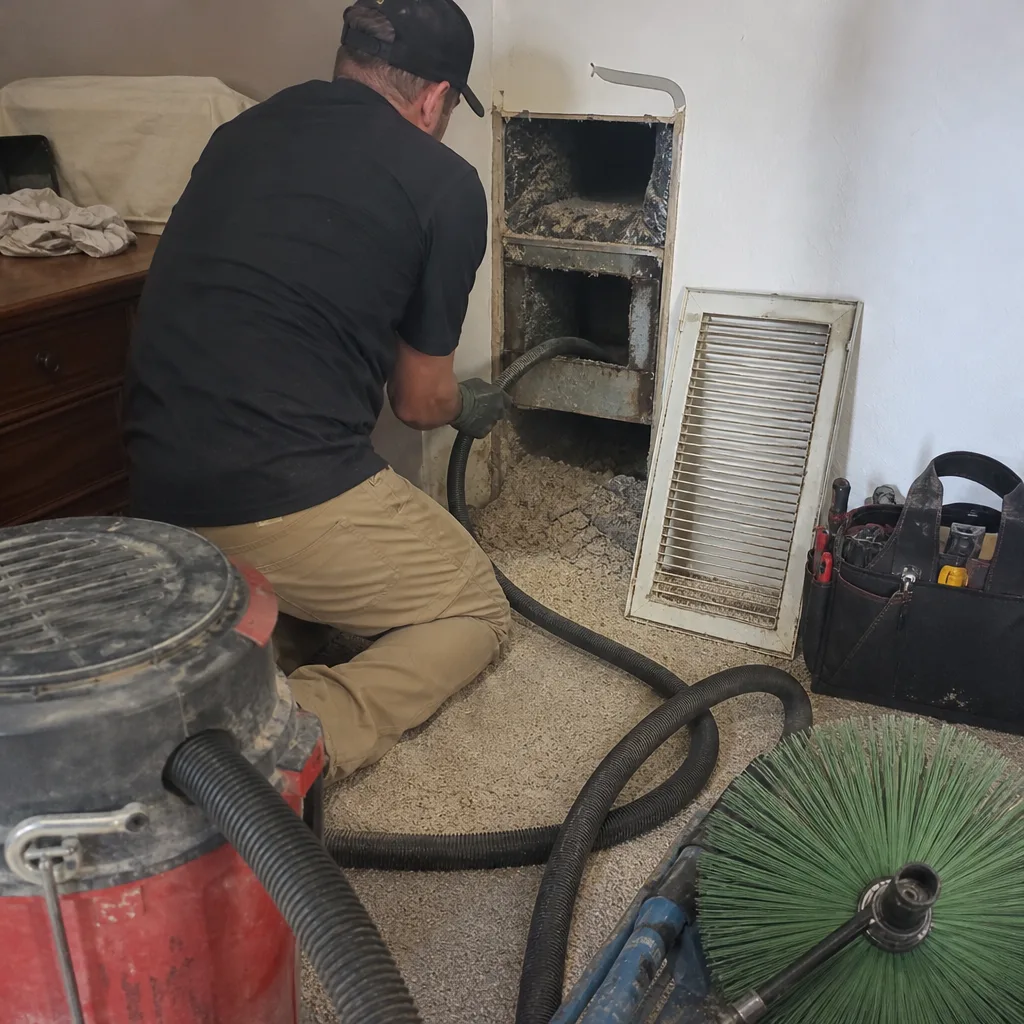 Before
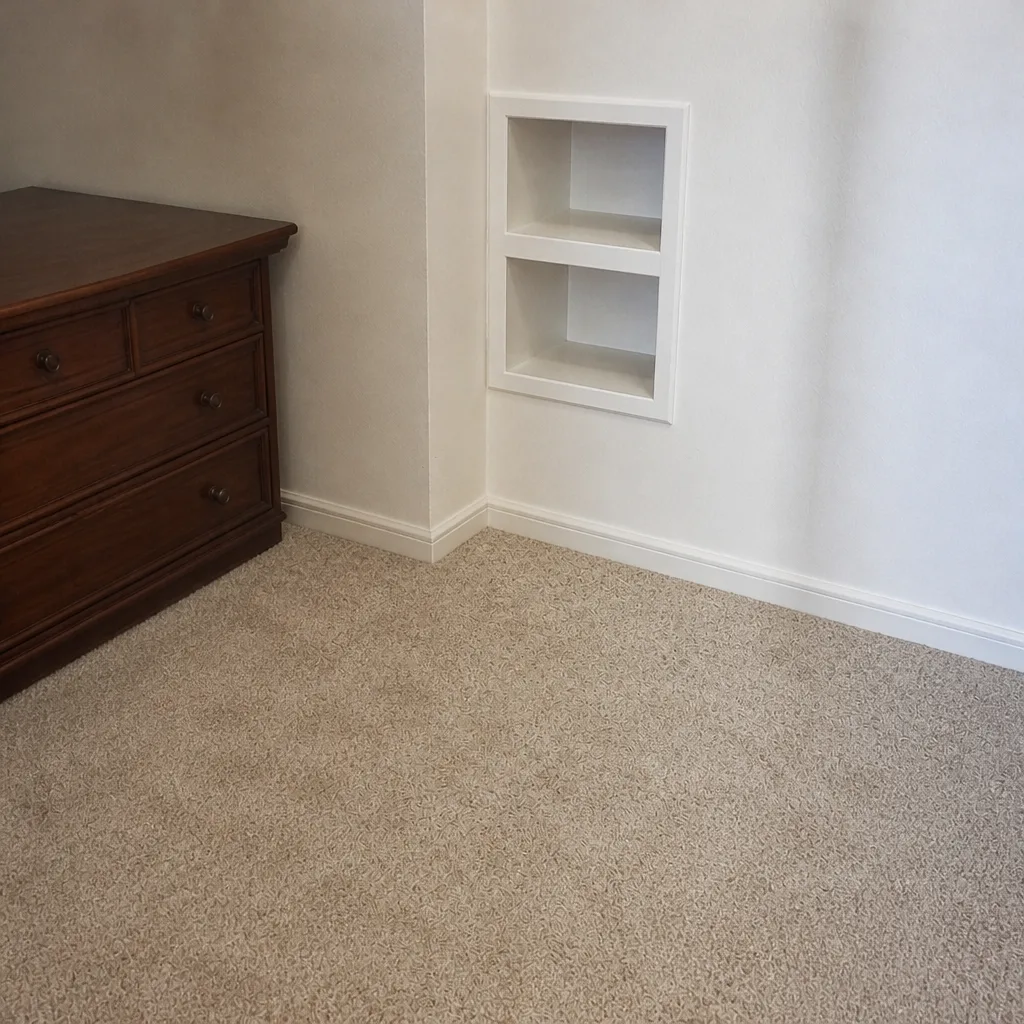 After
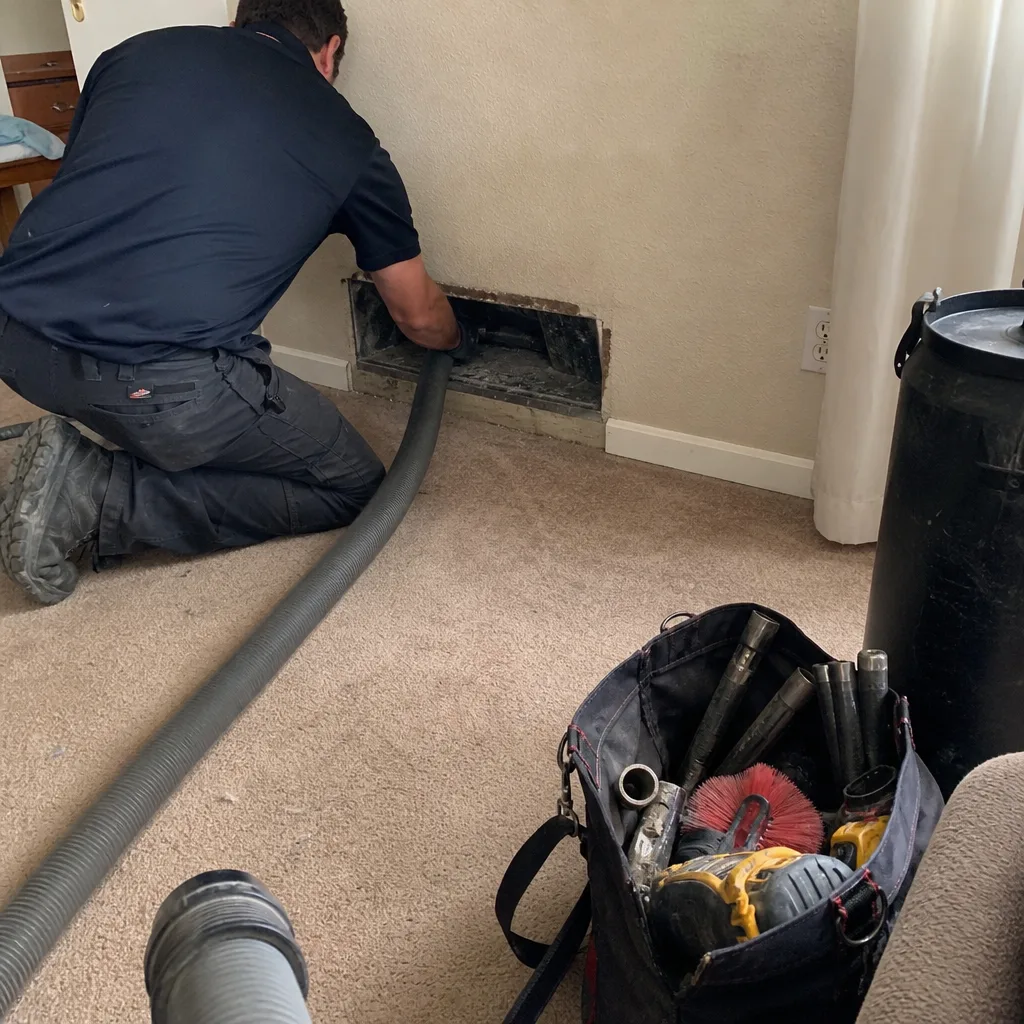 Before
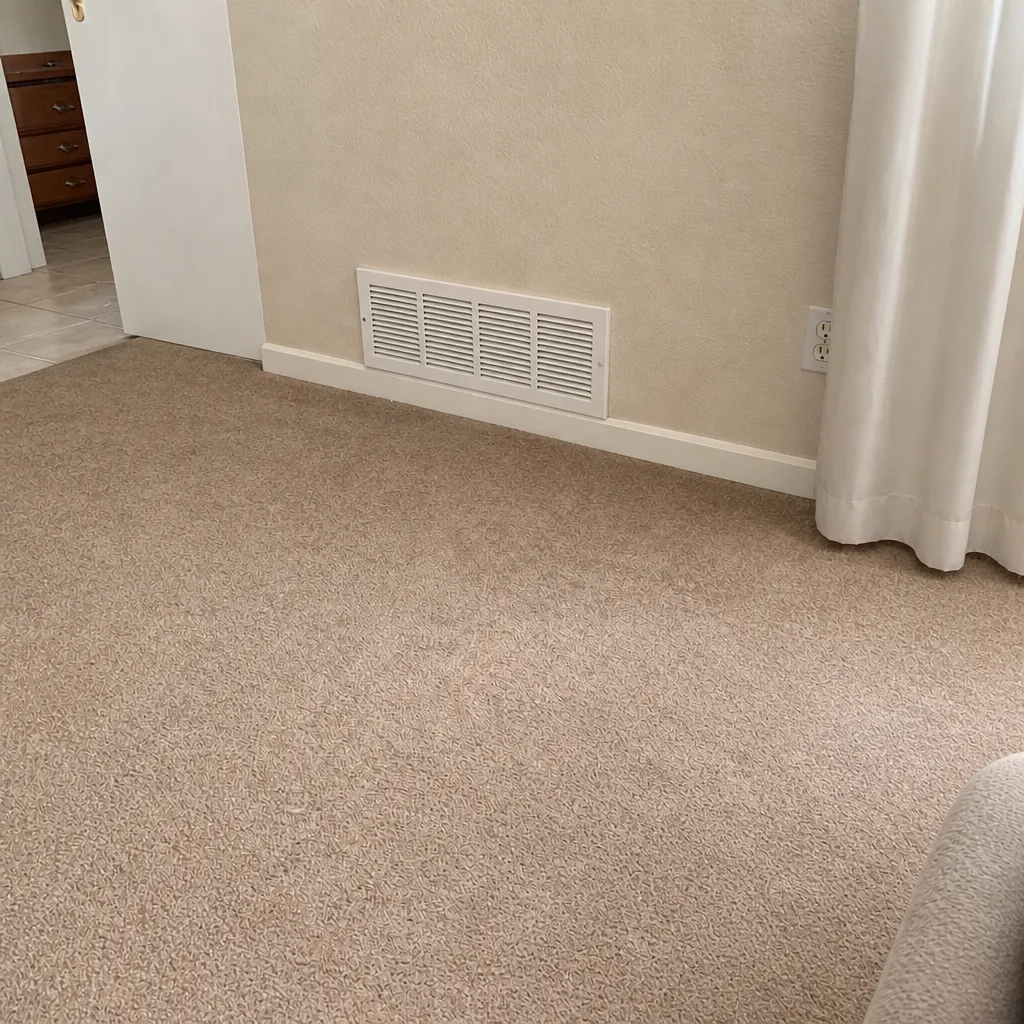 After
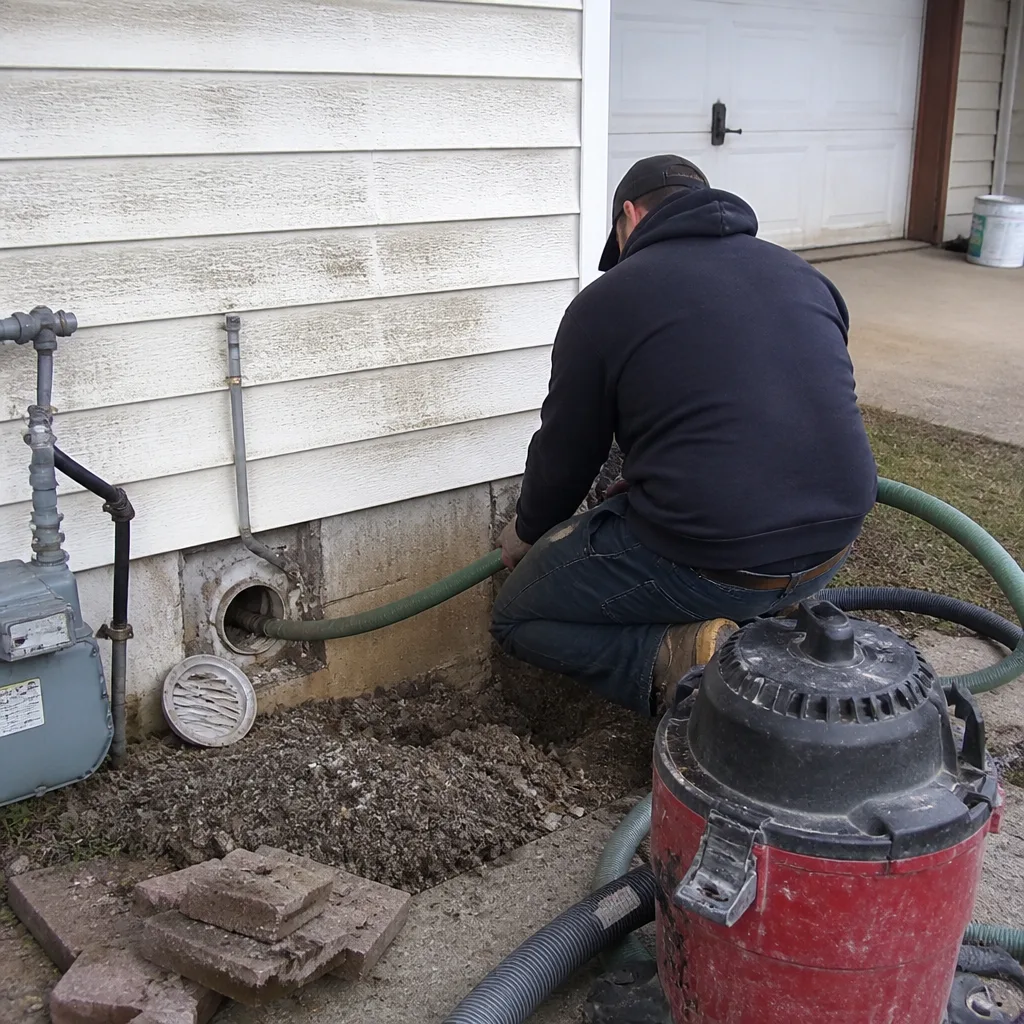 Before
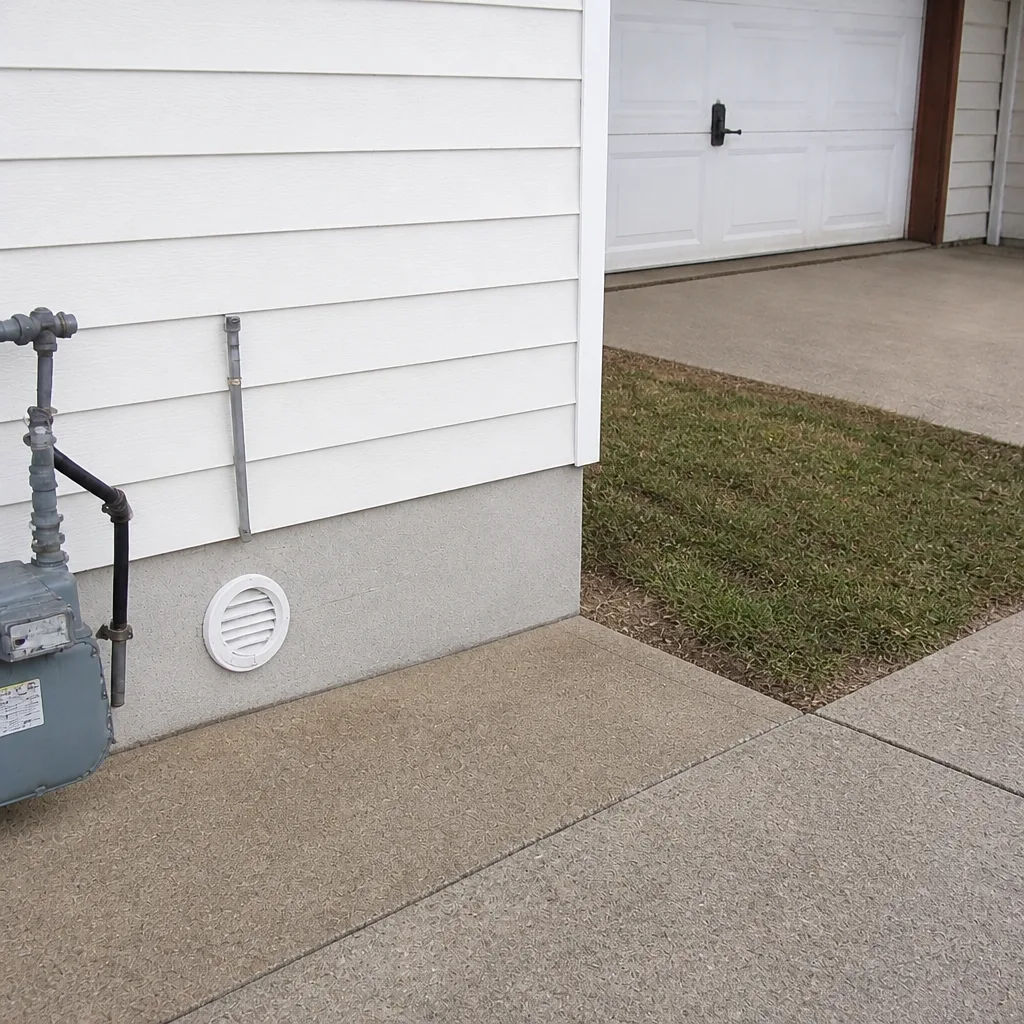 After
When to Call a Professional
Call a professional if your registers show streaks or debris, if you’ve recently finished a renovation, if you’ve just moved in, if allergies or asthma symptoms get worse indoors, or if the system has gone years without any attention. Call right away if you notice a musty smell on startup, a dryer that takes longer and longer to dry a load, or disconnected flex duct visible in an attic or crawl space. Duct cleaning isn’t a task for a shop vac and an afternoon. It’s a contained job that needs negative pressure, contact brushing and a camera to verify the result. Syracuse Air Duct Cleaning Pros offers free estimates in Syracuse – call (833) 549-7193. We answer 24/7. Fast dispatch from 7am to 7pm, Sunday through Friday.
Frequently Asked Questions
There’s no single price; it depends on system size, number of runs, access and whether the air handler, sanitizing or duct repair is included. You should get a written estimate before any work begins, and the final price is set by that estimate. Call (833) 549-7193 for a free estimate – we answer 24/7.
Cheap quotes usually skip the equipment and the scope: no negative-air capture, no brushing, no air handler check. Blow-and-go is faster and cheaper to run, and debris gets pushed back into the house rather than captured. Get the written scope, then compare. Call (833) 549-7193 for a free estimate – we answer 24/7.
Ask for before-and-after photos of your own ducts and a camera inspection pass before the crew leaves. A real cleaning includes verification: airflow measurement, camera inspection, and a written summary. If a company won’t show you photos, that’s your answer. Call (833) 549-7193 for a free estimate – we answer 24/7.
Base it on an assessment, not a calendar. Northern Utah’s inversion winters concentrate fine particulate in return ducts, and renovation dust, pets and household occupancy all shift the timing. Most homes do well with a look every few years and a cleaning when the system actually needs it. Call (833) 549-7193 for a free estimate – we answer 24/7.
Yes, they’re part of the same system and we assess both. A dirty coil and blower wheel will recontaminate clean ducts within weeks, so cleaning the ducts without the air handler leaves the job half done. We handle cleaning, repair, sealing and sanitizing in one visit. Call (833) 549-7193 for a free estimate – we answer 24/7.
Yes, dryer vent cleaning is a standalone service. A clogged dryer vent is a leading cause of residential fires and is worth scheduling on its own even if you’re not cleaning ducts right now. Call (833) 549-7193 for a free estimate – we answer 24/7.
The Bottom Line
A duct cleaning only counts if it treats the whole pressurized system: supply and return trunks, branches, register boots, flex runs, and the air handler coil and blower. Syracuse’s inversion winters and renovation dust push fine particulate into return ducts at a rate that makes assessment more useful than a fixed calendar. Source-removal cleaning with negative-pressure capture and contact brushing does the job; blow-and-go does not. A camera pass, airflow check and before-and-after photos of your own ducts are the proof it was done. When you’re ready for a free estimate and a flat price per system agreed in writing, our team handles cleaning, sealing, sanitizing and dryer vent work in one visit.
Written by the team at Syracuse Air Duct Cleaning Pros.